 (+34) 966 425 961
 CONTACTO



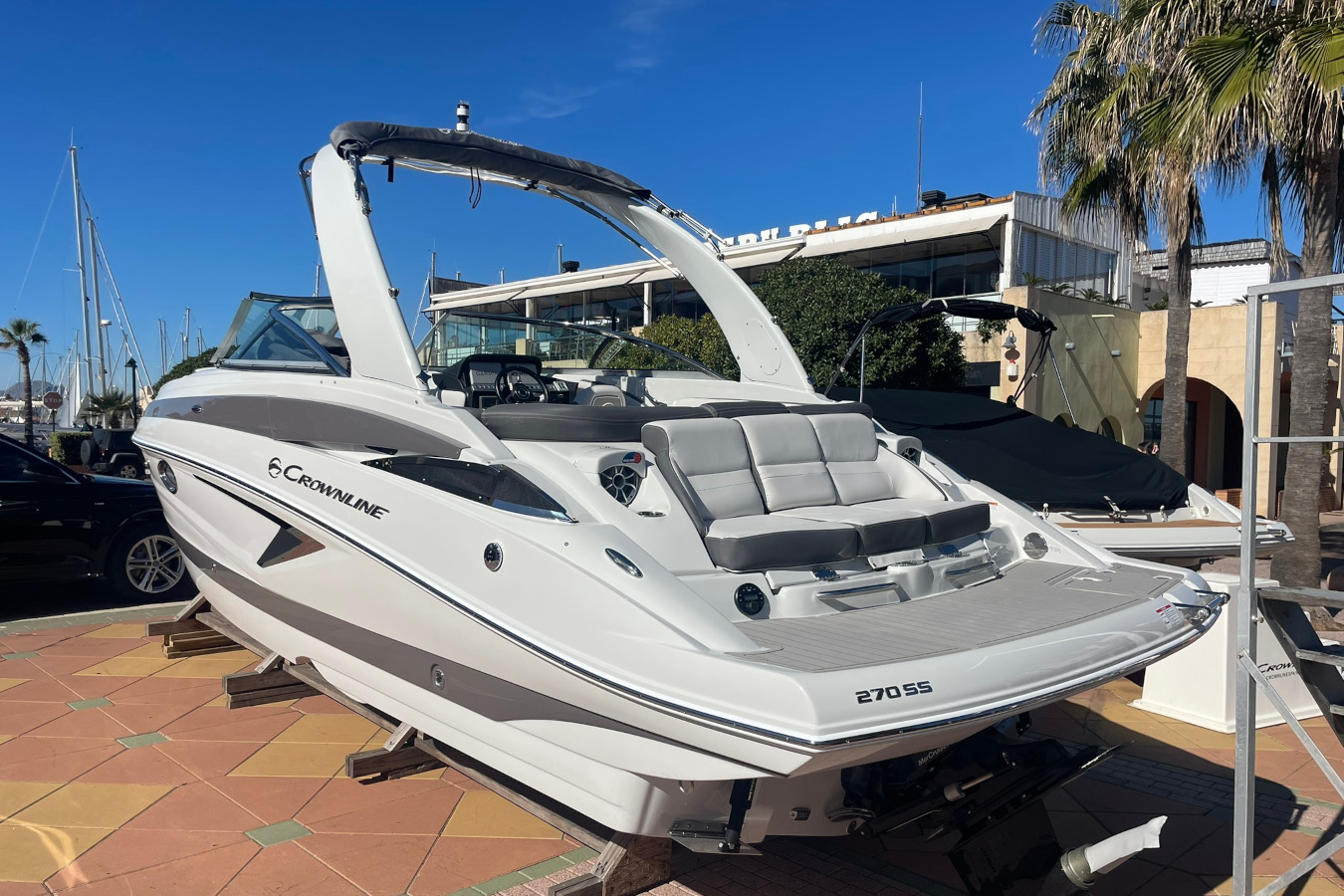
When is it worth buying a boat before the summer, and when is it better to wait until the end of the season?
Buying a boat before summer is worthwhile when your priority is to go boating during that same season, choose from a wider range of available boats and have enough time to arrange the berth, insurance, documentation and delivery.
Waiting until the end of the season may make more sense when you prioritise negotiating on specific boats, comparing options without rushing and preparing the boat for the following year, provided you are willing to accept a more limited selection and do not need to start boating immediately.
The decision can be summarised as follows:
- Buy before summer if you value usage time, availability and choice more highly.
- Wait until the end of the season if you are flexible about the model, equipment and delivery date.
- Do not wait solely for an assumed discount, because not every boat will drop in price and the one you want may be sold before then.
- Do not rush into buying in spring if you have not yet calculated the total cost or checked that the layout suits your needs.
The best time to buy a boat does not depend solely on the calendar. It depends on what you want to protect: your boating season, your ability to choose or your budget.
Quick comparison: buying before summer or waiting
| Factor | Before summer | End of season |
|---|---|---|
| Model availability | Usually greater | May be more limited |
| Immediate use | You can enjoy the season | Use may be postponed until the following year |
| Choice | More colours, engines and configurations | Greater dependence on remaining inventory |
| Potential negotiation | Depends on demand and the boat | May improve on certain boats |
| Sea trial | Favourable conditions and scheduling | Still possible, but with fewer suitable days |
| Boat preparation | Tighter deadlines | More time to install extras and prepare delivery |
| Berthing and services | Greater seasonal pressure | More time to organise the following year |
| Ideal profile | Decisive buyer | Flexible, planning-oriented buyer |
Direct answer: before summer you are mainly buying time and choice; at the end of the season you may gain more planning flexibility and, in some cases, greater negotiating power.
When is it worth buying a boat before summer?
Buying between the end of winter and spring can be a good decision when you already know the length, layout, engine configuration and budget you want.
The main advantage is not necessarily obtaining the lowest price. It is having more options available and being able to start boating when the good weather arrives.
Discover Boating points out that late winter or early spring can be suitable for buyers looking for recent models who want access to a broad selection before the main season. The same source identifies autumn as a potentially interesting period for buyers who are less concerned about purchasing the latest model.
1. You want to make the most of the entire summer
Time on the water also has value.
Waiting several months to save an uncertain amount may not be worthwhile if it means losing an entire season of outings, coves and family days. The opportunity cost does not appear on the invoice, but it directly affects the value you get from the purchase.
Before deciding to wait, ask yourself:
- how many outings you would make during that summer;
- how much you value enjoying the boat from the first year;
- whether you already have holidays planned;
- and whether your family expects to use it immediately.
If your goal is to go boating during that same season, it is worth starting with the boats currently available in stock, as an already configured boat can simplify delivery times compared with a factory order.
2. You are looking for a very specific configuration
Buying in advance usually gives you more flexibility to choose:
- model;
- engine;
- exterior colour;
- upholstery;
- cover or bimini;
- electronics;
- sound system;
- and other factory options.
If you wait until the end of the season, the remaining boats may not match your ideal configuration exactly.
In that case, the choice will not necessarily be between “the perfect cheap boat” and “the perfect expensive boat”, but between an available boat that requires compromises and a new factory order that will arrive later.
The guide on which extras are worth installing at the factory on a new boat and which are not helps distinguish between options that are better integrated from the outset and accessories that can be added later.
3. You need time to organise delivery
Boat delivery does not end when the contract is signed. It may also involve:
- registration;
- insurance;
- safety equipment;
- arranging or changing a berth;
- reviewing the documentation;
- installing accessories;
- preparing the boat;
- and initial training.
Buying before summer is worthwhile if you want to complete these arrangements without reaching July with everything still pending.
To prepare for the administrative side, you can consult the guide on buying a boat in Spain: documentation, taxes and CE explained without technical jargon.
4. You want to compare and test several boats
Physical availability matters especially when you are still deciding between different sizes or layouts.
Seeing and testing different boats allows you to compare:
- visibility from the helm;
- transition onto the plane;
- actual cockpit space;
- access to the swim platform;
- passenger comfort;
- noise and vibrations;
- and engine response.
A sea trial should not become a rushed formality simply because your holidays are approaching. Use this sea trial checklist before buying a boat to assess every option using the same criteria.
What are the risks of buying just before summer?
Buying before summer does not always mean buying well.
The approach of the season can cause buyers to:
- decide too quickly;
- accept an unsuitable layout;
- calculate only the monthly payment or initial price;
- fail to check the actual delivery times;
- or choose a boat because it is available rather than because it suits their needs.
The biggest risk is turning urgency into a buying criterion
“I want to go boating in August” should not replace questions such as:
- Does the boat suit my usual use?
- Can I afford its annual running costs?
- Is the berth suitable?
- Does the engine perform well with a realistic load?
- Does the layout work for my family?
- Have I reviewed the financing terms?
If your schedule forces you to ignore these questions, it is better to lose a few weeks of boating than to live with the consequences of the wrong purchase for years.
When is it worth waiting until the end of the season?
Late summer and autumn can be interesting for buyers who are not in a hurry and are willing to adapt their choice to the available inventory.
Discover Boating explains that autumn is often a quieter commercial period in many markets and that some dealers look to sell boats from the current year before receiving later models. This does not guarantee discounts on every boat, but it can create specific opportunities.
1. You are flexible about the model and equipment
Waiting works best when you are willing to consider:
- another colour;
- a different but suitable engine option;
- already installed extras;
- a boat from the current model year;
- or a different boat in stock from the one you originally had in mind.
The more non-negotiable requirements you have, the less likely you are to find a boat at the end of the season that meets all of them.
That is why, before deciding to wait, it is worth comparing a boat in stock with a factory order. This decision determines whether the commercial calendar can work in your favour or whether you need to reserve production and configure the boat from the outset.
2. You are looking for a specific opportunity, not a general discount
There is no rule requiring every boat to become cheaper in September or October.
End-of-season opportunities usually depend on:
- available inventory;
- age of the boat;
- arrival of new boats;
- commercial targets;
- installed equipment;
- and demand for the model.
The right strategy is therefore not to wait “until all prices fall”. It is to identify several suitable boats, follow their availability and be ready to decide if a sensible offer appears.
3. You do not need to use it immediately
Waiting until the end of the season may be reasonable if:
- you already own another boat;
- you are planning to move up to a higher range;
- you cannot go boating that summer;
- you do not yet have a berth;
- or you prefer to start using the boat the following season.
In this situation, buying in autumn allows you to organise insurance, accessories, initial maintenance, transport and delivery without rushing.
4. You want to prepare the boat during winter
Autumn and winter provide more time to install equipment without sacrificing days on the water.
It can be a good time to prepare:
- electronics;
- covers or shade systems;
- audio equipment;
- anchoring accessories;
- safety equipment;
- hull protection;
- and storage solutions.
The key is to ensure that any commercial saving is not cancelled out by unnecessary extras. Before configuring the boat, review which extras are worth ordering from the factory and which can wait.
What are the risks of waiting until the end of the season?
Waiting also has a cost.
1. The boat you wanted may no longer be available
A boat in stock is a specific asset. If someone else buys it, you cannot assume that an identical one will appear at the same price.
This is particularly important when you are looking for a specific combination of:
- model;
- engine;
- colour;
- equipment;
- and delivery date.
2. There may be less choice
End-of-season opportunities generally favour flexible buyers. If you need an exact configuration, the reduced selection may force you to compromise or place a factory order.
3. You may postpone the decision indefinitely
Some buyers wait for autumn, then for a boat show, then for the end of the year and finally for the following spring. The result is that they spend one or more seasons without a boat while waiting for an opportunity that may never appear.
Waiting only makes sense when you have:
- a clear objective;
- a defined budget;
- several suitable models;
- and a deadline for making your decision.
What about used boats?
The season also influences the second-hand market, but in a less uniform way.
At the end of summer, some owners may decide to sell to avoid another year of costs or because they want to move up to a higher range. However, in spring there may also be an increase in boats prepared and offered for the new season.
If you are considering a used boat, you should not choose it solely according to the month in which you buy. Far more important are:
- hull condition;
- maintenance;
- engine hours and diagnostics;
- documentation history;
- equipment;
- sea trial;
- and price compared with equivalent boats.
You can start by reviewing the used boats available from Crownline Spain and the comparison between used boats and new boats.
How does trade-in affect the best time to buy?
When you trade in your current boat as part of the transaction, you should not look only at the price of the new boat. The value of the boat you are trading in at that particular time also matters.
Waiting until the end of the season may improve your negotiating position on a specific boat, but it can also change:
- demand for your current boat;
- its valuation;
- the cost of keeping it for another winter;
- and the availability of the model you want to move up to.
The best time should therefore be calculated on the basis of the total financial difference, not an isolated discount.
The guide on when to trade in your current boat to move up to a higher range explores this scenario in more detail.
How does financing affect the timing?
A commercial promotion does not always mean that the complete transaction will be cheaper.
When financing is involved, you should compare:
- final price;
- deposit;
- APR;
- total interest;
- fees;
- term;
- linked insurance;
- and early repayment conditions.
A lower-priced boat financed on worse terms may ultimately cost more than another one purchased several months earlier.
Before deciding because of a temporary offer, review the guide on whether it is worth financing a boat in Spain.
The berth can also determine when to buy
In areas such as Dénia, Jávea, Moraira or Altea, owning a boat does not automatically solve the question of where to keep it.
Before completing the purchase, you should confirm:
- berth availability;
- accepted length and beam;
- price;
- included services;
- distance from your residence;
- and ease of entering and leaving the berth.
Buying before summer without having arranged a berth can create additional urgency. Waiting until the end of the season may give you more time to plan, but it does not guarantee that the exact berth you need will become available.
Consult the guide to berth prices in Dénia, Jávea, Moraira and Altea in 2026 to include this cost in your decision.
Which timing suits each type of buyer best?
Buy before summer if…
- you want to go boating that same year;
- you already know which model you need;
- you are looking for a specific configuration;
- you value having more options available;
- your berth arrangements are already underway;
- and you can complete the purchase without rushing.
Wait until the end of the season if…
- you do not need to use the boat immediately;
- you are flexible about colour, engine or equipment;
- you can make a quick decision when a suitable boat appears;
- you want to prepare the boat during winter;
- and you have set a budget and a deadline.
You should not buy yet if…
- you do not know your annual costs;
- you do not know which layout you need;
- you depend on financing that you have not yet analysed;
- you have not checked the berth;
- or you are choosing solely because of a promotion.
Decision matrix: buy now or wait?
Add one point for each statement that applies.
Signs that you should buy before summer
- I want to go boating this season.
- I know what type of boat I need.
- I need a specific configuration.
- I have calculated the total cost.
- My berth is arranged or the process is well advanced.
- I can take a sea trial without rushing.
Five or six points: buying before summer may make sense.
Signs that you should wait
- I do not need to go boating this year.
- I am flexible about the model and equipment.
- I am looking for a specific boat in stock.
- I can accept that there may be fewer options available.
- I want to prepare the boat during winter.
- I have set a final date for making my decision.
Five or six points: waiting until the end of the season may suit you better.
Signs that you should pause the purchase
- I am only reacting to an offer.
- I do not know the APR or total financing cost.
- I have not compared berthing and maintenance costs.
- I have not decided between new, used or factory order.
- I have not taken a sea trial.
Two or more points: it is advisable to complete your analysis before signing.
Common mistakes when deciding when to buy
Waiting for a discount that is not guaranteed
The end of the season may create opportunities, but it does not force a seller to discount a popular boat or one with an attractive configuration.
Buying in a rush to be ready for August
Your holiday dates should not lead you to accept a boat that does not suit your family or your style of boating.
Comparing only the purchase price
You should also include berthing, insurance, maintenance, fuel, taxes, financing and equipment.
Failing to confirm delivery in writing
“Available” does not always mean “ready to go boating tomorrow”. Confirm what work is still pending and the expected delivery date.
Choosing an unsuitable boat simply to take advantage of an offer
A discount loses its value if you end up paying to modify the boat or change boats again shortly afterwards.
Checklist before deciding when to buy
Before signing, check:
- How you will use the boat during the first year.
- How many boating days you would lose if you waited.
- Which models and configurations you would accept.
- Whether the boat is genuinely available.
- Exactly what is included in the price.
- When it could be delivered ready to use.
- How much the berth will cost.
- Which taxes and procedures apply.
- The total cost if you finance the purchase.
- Whether you have taken a sea trial.
- The value of your current boat if you are trading it in.
- Your deadline for buying or walking away.
Our recommendation at Crownline Spain
There is no universally perfect month for buying a boat.
Buying before summer is usually worthwhile when you want to maximise immediate use while keeping as much choice as possible. The end of the season can be interesting when you have flexibility, patience and a strategy focused on specific available boats.
The right decision should compare four factors:
- The price of the boat.
- Configuration and availability.
- The cost of losing a boating season.
- The total cost of ownership.
You can check the Crownline boats currently available in stock, compare the used boats or review the options for buying a new Crownline boat.
To assess the timing, configuration and delivery of a specific boat, you can contact Crownline Spain in Dénia.
Frequently asked questions
What is the best time of year to buy a boat?
It depends on your priorities. Before summer, there is usually greater interest in using the boat immediately and a greater need to secure availability. At the end of the season, opportunities may appear on specific boats, although there are generally fewer options to choose from.
Are boats always cheaper at the end of summer?
No. There may be more negotiating room on certain boats in stock, but there is no automatic discount on every boat. The price depends on the model, demand, inventory, equipment and commercial conditions.
Is it worth buying a boat in spring?
Yes, if you want to go boating during that same season, are looking for a specific configuration and have enough time to arrange delivery, insurance, documentation and a berth before summer.
What is the advantage of buying a boat in autumn?
It allows you to compare options with less urgency, prepare the boat during winter and consider potential opportunities on boats available at the end of the season.
Is it better to wait if I want to order the boat from the factory?
Not necessarily. If you need a specific configuration, it is advisable to check lead times well in advance. Waiting may delay delivery and cause you to lose part of the following season.
What happens if the boat in stock is sold while I wait?
You will need to choose another boat, accept a different configuration or place a factory order. Waiting is therefore only worthwhile if you are prepared to accept that available inventory may change.
Other news you might find interesting
- Boat CE design category A, B, C or D: what does it mean and which one do you need?
- Is a joystick worth installing on a boat? Advantages, limitations and who benefits most
- How to calculate the real range of a boat before setting off
- How to keep your boat in excellent condition all year round
- Single or twin engines: which configuration makes more sense on a recreational boat?