 (+34) 966 425 961
 CONTACTO



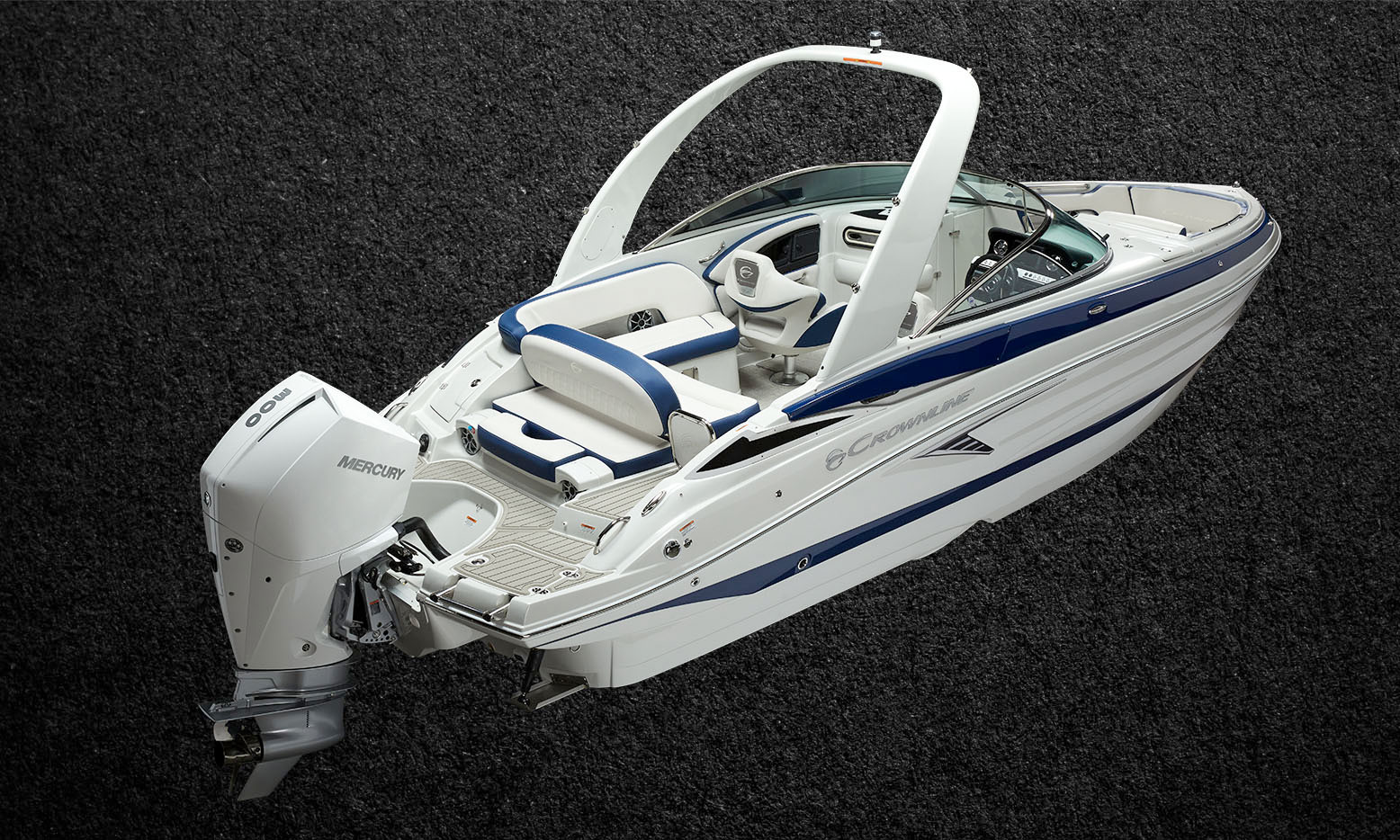
Twin or single outboard engines on daycruisers: real impact on trim, noise and resale value
On 7–9 m daycruisers, a single outboard usually wins in terms of weight, fuel consumption and maintenance, while a twin setup provides more powerful acceleration, better manoeuvrability in port and redundancy. If your plan is family and social, 1×300–350 hp is a safe bet; for sports, charter or heavy loads, 2×200–225 hp compensates for control and resale value. Explore real cases in the Crownline range and, if you want to make a decision based on data, check out our units in stock and schedule a sea trial from Contact.
Uncomplicated trimming: how behaviour changes with 1× and 2×
Simple (1×): reduces weight on the transom and slightly advances the centre of gravity, which usually translates into earlier planing and docile trim. On moderate V-shaped hulls, a subtle adjustment of the tabs is enough to keep the bow down and sail steadily at 20–25 knots with family and luggage.
Double (2×): adds weight at the rear but distributes the thrust over a wider band. This propeller ‘footprint’ provides outstanding lateral grip in cross seas and allows for asymmetrical trim (slightly + on the windward side and – on the leeward side) to flatten the side exposed to the wave. For the same total power (e.g., 1×300 vs 2×150–200), the double offers more propeller surface area, better load response and less ‘skidding’ when turning on support.
Mounting height and propellers: in both mountings, the secret lies in calibration. A simple, well-calibrated propeller can maintain efficient cruising speeds with a medium load; a poorly calibrated double propeller will require permanent tabs and generate unnecessary spray. Therefore, when evaluating models such as the Crownline 260 XSS or the E 260 XS, always check the propeller pitch/diameter and the height of the engine above the transom.
Noticeable noise: talking, listening to music and enjoying the journey
At idle speed and when manoeuvring: with a single block, there are fewer sources of vibration and less resonance on the bathing platform. It is the ideal setting for long anchorages and close conversations without raising your voice.
At 22–28 knots: with twin engines, each engine runs at lower rpm for the same speed; there is often less noise in the cabin and a more ‘relaxed’ tone when accelerating. Be careful with the trim: if you overuse the positive angle, aerodynamic spray and wind noise will increase.
Acceleration and noise peaks: the double propeller distributes effort and softens the ‘roar’ when setting off with 6–8 people on board; the single propeller accelerates very quickly in hulls that plane early, so the noise peak is short-lived. If your priority is conversation and music, look for propellers that lower the RPM when cruising and check the hull insulation during the sea trial.
For an independent reference with very practical pros and cons (cost, deck space, and planing performance), we recommend the article Single vs. Twin Outboards – Boating Magazine, which compares 1×300 with 2×150 on a real hull.
Total cost and resale without surprises: what happens in the market
Purchase, rigging and servicing: single propellers are usually cheaper to buy and maintain (oils, anodes, spark plugs, impellers, one less propeller). Twin propellers increase the cost by doubling the number of blocks and adding mounting hardware, although part of this extra cost is offset by their commercial appeal for certain profiles.
Local demand: on the Costa Blanca, twin-engine day cruisers are particularly popular for day charters and water sports enthusiasts due to their manoeuvrability in port and redundancy. For family and seasonal use, the simplicity of the single engine broadens the buyer base, which prioritises low consumption and maintenance costs.
Maintenance documentation: whether single or double, a detailed service logbook and, in double engines, balanced hours between engines make all the difference. If you want to protect your resale value, centralise servicing in our Services department and keep the reports for each service.
Manoeuvring and safety: precision in port and plan B en route
Port with crosswind: with two propellers, you can ‘walk’ the boat by applying opposite throttles and turn almost on its axis. This reduces stress in tight berths and facilitates manoeuvring in busy marinas. A single bow thruster and good steering blade also manoeuvre very well, but the immediate response of the double is difficult to match.
Realistic redundancy: many 7–9 m day cruisers cannot plane with a single engine if the other fails; it depends on the hull, weight and propellers. However, having a second propeller allows you to return at cruising speed with greater peace of mind and room for manoeuvre, which is valuable when the weather worsens between Dénia, Jávea and Moraira.
Use cases: decide based on your browsing style (without unnecessary technicalities)
Family plan and coves (Dénia–Jávea–Moraira)
- Profile: 4–6 persons, picnics, swimming, cruises at 20–25 knots.
- Recommendation: 1× for low weight, moderate consumption and simplicity.
- Guide models: 260 XSS and E 260 XS.
Water sports and heavy loads
- Profile: ski/wake outings, fully stocked refrigerator, water toys.
- Recommendation: 2× for immediate take-off, grip when turning and trim control with weight.
- Guide models: 280 XSS and 290 XSS (consult us for specifications in Spanish and available engines).
Coastal fishing with variable share
- Profile: side sea, thermal gusts at midday, rapid entries and exits from coves.
- Recommendation: 2× for asymmetrical trim and ‘very controlled’ turn if the weather changes.
Daily charter with skipper
- Profile: frequent manoeuvres, tight schedules, reliability requirements.
- Recommendation: 2× for superior manoeuvring and redundancy that the market values and pays for.
Specific examples in the Crownline range (to see and touch)
- Simple, efficient setup: 1×300–350 hp in an 8.0–8.5 m day cruiser designed for comfortable cruising at 24–27 knots with 4–6 passengers. Particularly well suited to the Crownline 260 XSS and E 260 XS.
- Double performance setup: 2×200–225 hp on 8.5–9.0 m hulls that appreciate wide thrust and response under load. Explore the superior XSS series with the 280 XSS and 290 XSS.
If you prefer brand new, start by buying a new boat in Dénia; if you are looking for opportunities with excellent value for money, check out our used boats.
Quick comparison table
| Criterion | Simple (1×) | Double (2×) |
|---|---|---|
| Plane and trim | Early planning; docile trim | Powerful start; asymmetric trim possible |
| Acoustic comfort | Less vibration when idling | Lower rpm at the same speed; smoother peaks |
| Manoeuvring in port | Correct (better with bow thruster) | Excellent: ‘walking’ with opposing gases |
| Consumption and maintenance | Minor (one block) | Major (two blocks and propellers) |
| Typical resale | Large family base | Very attractive for charter/sport |
| Redundancy | No | Yes (safe return when travelling) |
Useful frequently asked questions (short, quotable answers)
Can a day cruiser with 2× plane with a single engine?
Often not in 7–9 m; it depends on the hull, weight and propellers. The sensible thing to do is to test it on your specific model.
Does the twin always consume more than the single?
As a rule, yes: two blocks, more drag and more servicing. With good propeller selection, the difference can be narrowed in steady cruising, but the single remains more economical in the long run.
Which engines are best suited to the XSS series?
For 8–9 m: 1×300–350 hp (family use) or 2×200–225 hp (sport/cargo). See 260 XSS, 280 XSS and 290 XSS.
Will I lose a lot of bathroom space if I install two engines?
Yes, somewhat: the two outboards take up more space on the transom and tend to reduce the central passage to the platform. Many hulls compensate for this with side platforms and offset ladders; it is advisable to see this in person on boats such as the 280 XSS or 290 XSS to check access and circulation before deciding.
Does having two alternators improve the power supply for refrigerators, electronics and audio equipment?
Having two alternators increases the charging margin, but it does not replace a good battery system. The best option is to install separate banks, charge relays (VSR/ACR) or DC-DC converters, and a properly sized shore power charger. We can configure this for you and document it in Services.
If I choose a single engine, is it worth installing a bow thruster for manoeuvring in port?
Yes. On 7–9 m daycruisers, a bow thruster provides immediate lateral control and reduces the practical difference compared to a twin engine when mooring in windy conditions, as well as adding value when it comes to resale due to its ease of use.
Shall we decide based on real data? Write to us via Contact and schedule your sea trial. We will provide you with a comparative report of 1× vs 2× with rpm/kn, dB and planing times for your specific case, and we will help you configure your next boat from the Crownline range and our units in stock.
Other news that may interest you
- Boat CE design category A, B, C or D: what does it mean and which one do you need?
- Is a joystick worth installing on a boat? Advantages, limitations and who benefits most
- How to calculate the real range of a boat before setting off
- How to keep your boat in excellent condition all year round
- Single or twin engines: which configuration makes more sense on a recreational boat?