 (+34) 966 425 961
 CONTACTO



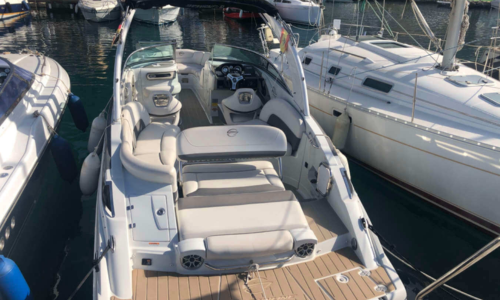
How to keep your boat in excellent condition all year round
Keeping a boat in excellent condition involves much more than carrying out an annual engine service. Proper boat maintenance combines cleaning, mechanical servicing, electrical checks, bilge inspection, battery care, hull maintenance, antifouling, upholstery care, safety equipment and regular inspections.
A well-organised maintenance routine helps identify problems before they become serious, reduce unexpected breakdowns and preserve both the boat’s performance and its long-term value.
The short answer is:
To keep a boat in good condition, combine checks before and after every trip, monthly inspections of the main onboard systems, engine servicing according to the manufacturer’s schedule and a more comprehensive inspection at least once a year.
The exact frequency depends on the type of boat, engine configuration, operating hours, storage or mooring conditions and how the boat is used.
What maintenance does a boat need? Quick overview
| Frequency | What to check |
|---|---|
| Before every trip | Fuel, batteries, bilge, engine, cooling, steering and safety equipment |
| After every trip | Fresh-water rinse, cleaning, salt removal, upholstery and damp areas |
| Monthly | Batteries, pumps, electrical connections, fluid levels, anodes and moving parts |
| According to hours/manufacturer | Oil, filters, spark plugs, impeller, gearbox and other engine components |
| Several times a year | Hull, gelcoat, propeller, underwater surfaces, steering and electronics |
| Annually | General inspection, haul-out where necessary, antifouling and seasonal preparation |
| Before long periods of inactivity | Fuel, batteries, moisture, water systems and general protection |
This table should be used as a planning guide.
The exact service intervals for the engine and individual components should always follow the relevant manufacturer’s recommendations.
1. Rinse the boat after boating in salt water
One of the simplest maintenance tasks is also one of the most important.
Salt can remain on:
- gelcoat;
- stainless steel;
- fittings;
- glazing;
- catches;
- upholstery;
- structures;
- electrical connections;
- engines.
If salt remains on these surfaces for long periods, it can accelerate corrosion and deterioration of certain materials.
After boating in the Mediterranean, rinse accessible areas with fresh water and use cleaning products that are compatible with the materials on your boat.
Pay particular attention to:
- fittings;
- tracks;
- hinges;
- catches;
- bathing platform;
- boarding ladder;
- windscreen;
- areas around the engine.
The aim is not necessarily to carry out a full detail after every trip.
The priority is to avoid leaving salt, dirt and moisture unnecessarily on the boat.
2. Do not close the boat while it is still damp
Accumulated moisture can cause:
- unpleasant smells;
- mould;
- upholstery damage;
- staining;
- corrosion;
- condensation inside lockers.
After cleaning, allow damp areas to dry before fully closing the boat whenever possible.
Pay particular attention to:
lockers + bilge + upholstery + areas beneath seats + enclosed compartments.
If you find water somewhere that would normally be dry, do not simply remove it.
Try to identify the source.
3. Check the bilge and automatic bilge pump
The bilge can reveal a great deal about the overall condition of a boat.
A quick inspection may help identify:
- water ingress;
- fluid leaks;
- defective connections;
- dirt or debris;
- unusual smells.
The automatic bilge pump should be operational and free from obstructions.
Simply having a pump installed is not enough if:
- the float switch is blocked;
- the battery is discharged;
- debris is obstructing the inlet;
- the discharge hose is blocked.
For more detail, see our guide to how an automatic bilge system works and why it is vital.
4. Service the engine according to both hours and time
There is no single maintenance interval that applies to every marine engine.
Manufacturers may specify servicing according to:
operating hours or calendar time, whichever comes first.
Depending on the engine, maintenance may include:
- engine oil;
- oil filter;
- fuel filters;
- spark plugs;
- lubrication points;
- water-pump impeller;
- gear oil;
- anodes;
- belts;
- cooling system.
The primary reference should always be the maintenance schedule for your specific engine.
This is why it is worth recording engine hours from the first day of ownership.
A well-documented service history also makes future diagnostics easier and can become a valuable asset if you eventually sell the boat.
5. Flush the engine with fresh water when recommended
For engines regularly used in salt water, removing salt deposits from the cooling system can be particularly important.
The correct procedure varies by engine.
Not every system should be flushed in exactly the same way.
Many modern outboards include dedicated flushing connections.
The key point is:
do not wait for a cooling problem to appear before paying attention to the system.
Preventive maintenance is normally much less expensive than repairing damage caused by corrosion or poor cooling.
6. Inspect the propeller regularly
The propeller is continuously exposed to potential damage.
An impact, rope or fishing line wrapped around the shaft can affect performance.
Check for:
- impacts;
- bent blades;
- visible damage;
- rope;
- fishing line;
- debris around the shaft;
- new vibration while underway.
A damaged propeller can affect:
- acceleration;
- vibration;
- speed;
- fuel consumption;
- engine RPM.
If the boat suddenly behaves differently, do not assume immediately that the engine is the problem.
The propeller should also be part of the diagnosis.
7. Check the batteries before problems appear
Batteries often receive attention only after they begin to fail.
It is better to act earlier.
Periodically check:
- state of charge;
- terminals;
- corrosion;
- mounting;
- cables;
- connections.
A battery can display apparently normal voltage while no longer having sufficient capacity under load.
Age matters as well.
Record the installation date so you are not relying on memory several years later.
On boats with multiple battery banks, make sure you understand which circuits each bank supplies and how the charging system operates.
8. Inspect electrical connections and systems
The marine environment is particularly demanding on electrical components.
Salt and moisture can accelerate corrosion of terminals and connections.
Inspect regularly:
- battery terminals;
- fuses;
- switches;
- visible wiring;
- lights;
- pumps;
- chargers;
- navigation electronics.
Do not normalise intermittent faults.
A light that only works occasionally or a pump that needs several attempts to start may be an early warning sign.
9. Protect the hull and gelcoat
The hull does more than determine how the boat looks.
It is continually exposed to:
- ultraviolet radiation;
- salt;
- dirt;
- pollution;
- minor impacts;
- marine growth.
Suitable cleaning and periodic gelcoat protection help preserve the finish.
During inspections, look for:
- impacts;
- cracks;
- deep scratches;
- discolouration;
- previous repairs;
- possible blistering.
If you notice small blisters or areas that could indicate moisture problems, avoid diagnosing the issue on appearance alone.
Our guide to preventing osmosis in the hull of a recreational boat covers this subject in more detail.
10. Monitor the condition of the underwater hull
Marine growth on the underwater surfaces can affect:
- speed;
- acceleration;
- planing;
- fuel consumption;
- handling.
How quickly growth appears depends on factors such as:
- water temperature;
- location;
- how long the boat remains stationary;
- antifouling system;
- frequency of use.
There is therefore no universal cleaning interval.
The better approach is to inspect the underwater surfaces regularly and act according to their actual condition.
For a deeper look at this area, see our guide to anti-algae systems and boat-bottom cleaning.
11. Inspect sacrificial anodes
Sacrificial anodes help protect certain metal components against corrosion.
They are specifically designed to deteriorate.
It is therefore not enough to check that they are simply “still there”.
Check:
- how much material remains;
- whether they are securely attached;
- their general condition;
- whether they are appropriate for the installation and environment.
Once they reach the manufacturer’s recommended level of wear, they should be replaced.
12. Look after the upholstery from day one
Sunlight, sunscreen, salt, moisture and regular use can be demanding on marine upholstery.
To preserve it:
- remove salt;
- clean stains promptly;
- use suitable products;
- avoid aggressive cleaners;
- allow it to dry;
- protect it from prolonged sun exposure when the boat is not in use.
Pay particular attention to seams and joins, as these areas may retain moisture.
13. Maintain hinges, catches and moving components
Boat maintenance is not only about the engine.
Apparently minor components such as:
- hinges;
- catches;
- tracks;
- latches;
- joints;
- seat mechanisms;
also suffer from salt, moisture and repeated use.
Regular inspections and suitable lubrication can prevent small problems from developing into seized or broken components.
14. Check steering and trim
Before getting underway, make sure the steering operates normally and does not show:
- unusual stiffness;
- excessive play;
- irregular movement;
- noise;
- visible leaks.
Check the engine trim system as well.
Any change from the boat’s normal behaviour deserves investigation.
It is better to identify a developing problem early than to wait until the system fails completely.
15. Do not overlook the fuel tank and fuel system
The fuel system also requires attention.
Problems may develop because of:
- contamination;
- water;
- blocked filters;
- ageing fuel;
- deteriorated connections.
The correct way to manage fuel during a long period of inactivity depends on the engine, fuel type and manufacturer’s recommendations.
Avoid universal rules such as:
“always leave the tank completely full” or “always leave it empty”.
Follow the recommendation appropriate to the specific installation.
16. Check safety equipment regularly
Safety equipment should not remain onboard for years without being inspected.
Periodically check:
- lifejackets;
- fire extinguishers;
- signalling equipment;
- first-aid kit;
- communication equipment;
- navigation lights;
- mandatory equipment for your area of operation.
Pay particular attention to expiry dates and inspection dates where applicable.
Safety equipment is part of boat maintenance.
17. Keep a maintenance log
One of the most useful ownership habits is documenting the work carried out.
You do not need a complicated system.
A simple table can include:
| Date | Engine hours | Work carried out | Workshop/product | Next service |
|---|---|---|---|---|
| 15/03 | 124 h | Oil and filter | Workshop | 224 h / manufacturer schedule |
| 02/05 | 142 h | Battery inspection | Owner | 1 month |
| 10/06 | 156 h | Underwater hull inspection | Service | According to condition |
This makes it easier to track:
- when work is due;
- how engine hours are increasing;
- recurring repairs;
- ownership costs;
- replaced components.
If you later sell the boat, a clear maintenance history can also give the next owner greater confidence.
18. Use a monthly boat-maintenance checklist
Trying to remember every task eventually results in something being forgotten.
It is more effective to turn maintenance into a routine.
A monthly inspection may include:
- bilge;
- pumps;
- batteries;
- electrical connections;
- fluid levels;
- steering;
- trim;
- propeller;
- anodes;
- upholstery;
- fittings;
- lights;
- safety equipment.
Rather than duplicating every check here, use our monthly maintenance checklist for your Crownline as a practical recurring tool.
This article acts as the overall maintenance guide; the checklist is designed for routine use.
19. Adapt maintenance to how much you use the boat
A boat that runs 20 engine hours per year does not require exactly the same planning as one that operates for 200 hours.
As use increases:
- hour-based service intervals are reached sooner;
- wear-related components need more frequent observation;
- documenting work becomes increasingly important.
However, low use does not eliminate the need for maintenance.
Some components age because of:
time + moisture + temperature + inactivity, not only through use.
20. Maintenance also depends on where the boat is kept
Maintaining a boat that remains permanently in the water is different from maintaining one that is:
- stored ashore;
- kept on a trailer;
- stored under cover;
- continuously exposed to the sun.
A boat permanently in the water needs particular attention to:
- underwater surfaces;
- anodes;
- mooring lines;
- bilge;
- water ingress.
A boat stored ashore may reduce some of these issues but still needs attention to:
- batteries;
- moisture;
- fuel;
- engine;
- upholstery.
The maintenance plan should reflect the boat’s actual environment.
21. Prepare the boat correctly for a long period of inactivity
If the boat will remain unused for several weeks or months, simply closing the cover and leaving is not enough.
Depending on the boat and the length of the lay-up, preparation may involve:
- fuel;
- batteries;
- freshwater system;
- cleaning;
- ventilation;
- moisture control;
- upholstery protection;
- engine preparation.
For longer winter lay-ups, see our dedicated guide to maintaining and storing a boat during winter.
This allows this page to remain the main maintenance guide without duplicating the entire winter-storage topic.
22. How much does boat maintenance cost?
There is no universal figure.
The cost depends on:
- boat length;
- engine configuration;
- number of engines;
- annual operating hours;
- mooring arrangements;
- age;
- condition;
- equipment;
- work required.
A common mistake is to look only at the annual engine service.
The real budget can include:
mechanical servicing + haul-out + hull care + antifouling + batteries + consumables + cleaning + repairs + mooring + insurance.
Maintenance should therefore be considered as part of the boat’s total cost of ownership.
23. Which maintenance can an owner do and what should be left to a professional?
Owners can take care of many routine inspection and cleaning tasks, including:
- cleaning;
- visual inspections;
- checking fluid levels where appropriate;
- checking the bilge;
- testing lights;
- monitoring batteries;
- recording engine hours.
Other work requires specialist knowledge, tools or diagnostic equipment.
When work involves:
engine + fuel + electrical systems + steering + structural components + safety-critical systems, professional assistance is advisable if the owner does not have the necessary skills or equipment.
For technical support, see the boat maintenance and support services available from Crownline Spain.
A simple boat-maintenance schedule by frequency
Before every trip
Check:
- fuel;
- batteries;
- bilge;
- steering;
- engine;
- essential safety equipment.
After every trip
Prioritise:
- removing salt;
- cleaning;
- drying;
- visual inspection;
- storing equipment correctly.
Once a month
Inspect:
- batteries;
- electrical connections;
- pumps;
- bilge;
- anodes;
- propeller;
- steering;
- fittings.
According to operating hours or calendar intervals
Carry out:
- engine servicing;
- filter replacement;
- oil changes;
- cooling-system maintenance;
- other manufacturer-specified work.
Once a year
Plan a wider inspection covering:
- engine;
- hull;
- underwater surfaces;
- batteries;
- electrical systems;
- safety equipment;
- mechanical systems.
Common boat-maintenance mistakes to avoid
Waiting until something fails
Preventive maintenance is designed to identify problems before a breakdown occurs.
Not recording engine hours
Without an accurate record, planning hour-based servicing becomes much more difficult.
Assuming low engine hours mean little maintenance
Many components deteriorate with time as well as use.
Using any household cleaning product
Marine materials may require specific products to prevent damage.
Ignoring small amounts of water
Water in an area that should normally be dry should always be investigated.
Leaving maintenance until the beginning of summer
Unexpected repairs in the middle of the boating season can cost valuable days on the water.
Not keeping invoices
Invoices form part of the boat’s technical and maintenance history.
Annual checklist for keeping your boat in good condition
Before starting a new boating season, check:
- engine servicing is up to date;
- engine hours are recorded;
- batteries are in good condition;
- electrical connections have been inspected;
- bilge is clean;
- bilge pump is operational;
- steering and trim work correctly;
- propeller is undamaged;
- anodes have been inspected;
- hull has been checked;
- underwater surfaces are in good condition;
- gelcoat is protected;
- upholstery is clean and dry;
- fittings operate correctly;
- safety equipment has been checked;
- maintenance records are up to date.
Our recommendation at Crownline Spain
The best strategy for keeping a boat in excellent condition is not to carry out one major service each year and ignore it in between.
Effective maintenance combines:
frequent inspections + cleaning after use + scheduled servicing + documented maintenance + prompt action when something changes.
An owner who understands how their boat normally behaves is much more likely to notice when something is different.
A new:
noise + vibration + smell + moisture + temperature change + difference in engine response
may be an early indication that a component needs attention.
To turn this approach into a routine, use our monthly Crownline maintenance checklist and review our guide to maintaining and storing your boat during winter when the season ends.
For professional servicing, seasonal preparation or technical assistance, see the marine services offered by Crownline Spain or contact Crownline Spain.
Frequently asked questions about boat maintenance
What maintenance does a boat need?
A boat requires regular maintenance of its engine, batteries, electrical system, bilge, pumps, hull, underwater surfaces, propeller, anodes, steering, upholstery and safety equipment. The exact frequency depends on the manufacturer, use and storage conditions.
How often should a boat engine be serviced?
It depends on the engine. Manufacturers specify service intervals according to operating hours, calendar time or both. The maintenance schedule for the specific engine should always be followed.
Should you rinse a boat after every trip?
After boating in salt water, it is highly advisable to remove salt from exposed surfaces and components to help reduce corrosion and deterioration.
What maintenance does a boat need if it is rarely used?
Even a lightly used boat needs regular checks. Batteries, fuel, moisture, anodes, connections and other components can deteriorate through time and inactivity.
What should be checked before going boating?
At a minimum, check fuel, batteries, bilge, engine operation, steering and the safety equipment required for the planned trip.
How often should the underwater hull be checked?
There is no universal interval. It depends on whether the boat remains in the water, temperature, location, marine growth and the antifouling system used.
How can boat breakdowns be prevented?
Not every breakdown can be prevented, but preventive maintenance, regular inspections, following manufacturer service intervals and identifying changes early can significantly reduce the risk of unexpected problems.
Should I keep a boat maintenance history?
Yes. Recording dates, engine hours, work carried out and invoices makes maintenance easier to plan and provides useful information for diagnostics, warranty claims and future resale.
Which boat maintenance should be carried out by a professional?
Work involving engines, fuel systems, electrical systems, steering, diagnostics, structural components or safety-critical systems should be carried out or supervised by professionals when the owner does not have the required expertise or equipment.
Other news that may interest you
- Boat CE design category A, B, C or D: what does it mean and which one do you need?
- Is a joystick worth installing on a boat? Advantages, limitations and who benefits most
- How to calculate the real range of a boat before setting off
- How to keep your boat in excellent condition all year round
- Single or twin engines: which configuration makes more sense on a recreational boat?