 (+34) 966 425 961
 CONTACTO



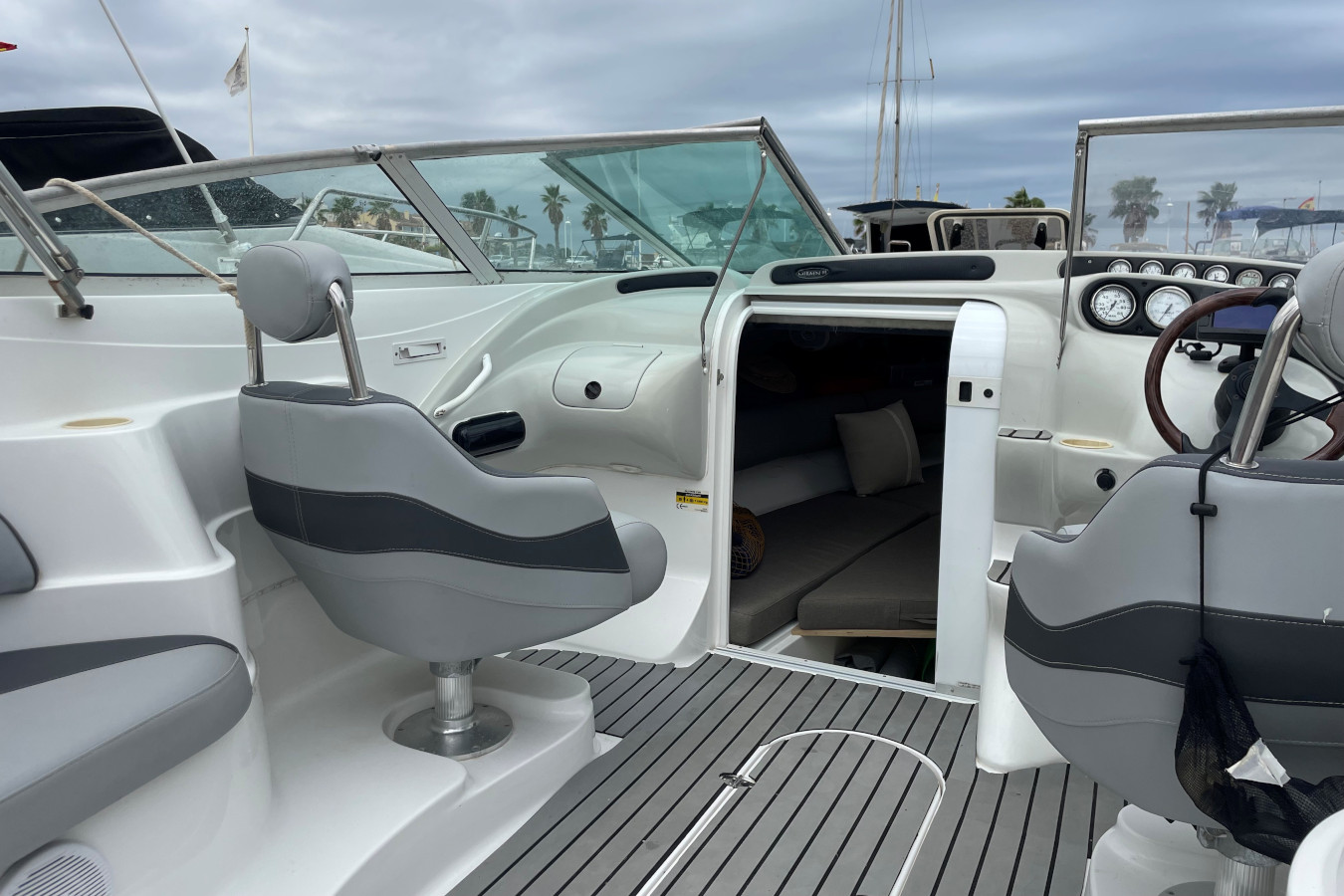
Sea trial in Dénia: 2026 purchase checklist for Crownline boats
Buying a boat is an exciting decision… and a technical one. A well-designed sea trial at the Marina de Dénia allows you to test the hull, engine and equipment in real conditions on the Levante coast. Here is the 2026 checklist we use at Crownline Spain to ensure your investment is safe and enjoyable from day one. If you want a unit available this month, check out our models in stock ready to test.
Before sea trials: documentation and preparation
- Appointment: confirm time, mooring and estimated duration (min. 45–60 min, with open sea section). If you haven’t chosen a boat yet, start here: buy a new boat in Dénia.
- Documentation: CE/HIN, manuals, maintenance history, engine hours, valid insurance policy for testing.
- Configuration: propeller type, trim tabs, fuel and water tanks ≥ 50% full, ballast/passengers similar to actual use.
- Suggested route: mini-circuit Dénia → open sea (heading E/SE) → anchoring and docking manoeuvres.
- Weather: check the official coastal forecast from AEMET before setting out: Mediterranean coastal forecast.
On the jetty: step-by-step cold inspection
- Hull and underwater hull: gelcoat, joint lines, fittings, water intake, depth sounder, trim tabs.
- Stern and transmission: condition of propellers, shaft/tail, anodes, clearances.
- Bathtub and bow: non-slip flooring, storage lockers, bathing platform and ladder, handrails.
- Upholstery and stitching: UV wear, microcracks, anchors.
- Electrical panel: fuses, terminals, wiring order; AGM/Lithium batteries (date, BMS).
- Engine: cold start, smoke, fluid leaks, idle temperature, ECM codes.
- Electronics: plotter, VHF (MMSI programmed), NMEA2000, battery charger, USB chargers.
In navigation: objective metrics you should note down
- Idling (600–800 rpm): directional stability, vibrations, parasitic noises.
- Economical cruising: record rpm, knots, L/h and L/NM. Look for a stable efficiency setting.
- Fast cruising: observe trim, spray and bow angle.
- Acceleration: time-to-plane (seconds from 0 to gliding).
- WOT (full throttle, a few seconds): maximum rpm within the manufacturer’s range.
- Sharp turns (to port and starboard): cavitation, hull grip, recovery.
- Emergency stop and restart: response, control, management.
- Anchoring and approaching at low speed: reaction to crosswind, inertia, use of thruster if equipped.
Professional tip: if you are comparing two units, use an identical log sheet and navigate the same stretch with similar sea conditions and load.
Real comfort: noise, vibrations and ergonomics on board
- Approximate dB with sound level meter app (cabin/bathtub): idle / cruising / WOT.
- Vibration: table, windscreen and fittings; there should be no resonance at 2,800–3,200 rpm.
- Ergonomics: pilot posture when standing and sitting, visibility when gliding, control reach, side aisles and bow access.
- Life on board: size of bathing platform, shower, awnings (bimini/hardtop), refrigerator, WC (if equipped), fender storage.
For the day after, save this guide: monthly maintenance checklist for your Crownline.
Security and electronics: the essentials in 2026
- Electronics: updated cartography, AIS receiver, autopilot (if applicable), depth sounder, radar on cruisers.
- NMEA2000/Network: checks engine, fuel, and sensor data on the network.
- Safety equipment: life jackets, valid pyrotechnics, automatic bilge pump (manual and automatic activation), fire extinguishers with expiry date.
- Power: status of lithium/AGM batteries, charger, alternator and terminal voltage with engine running.
- Connectivity: port socket, 12V/USB chargers, Bluetooth/marine audio (power and distortion).
After the test: decisions and negotiation
- Brief report: attach metrics and photos. Any deviation outside the range (low WOT rpm, high consumption, vibration) must have an action plan.
- Offer conditional upon: official inspection, replacement of anodes/propeller, electronic upgrade or 0 hours maintenance.
- Resale value: request historical data on similar units in the area and equipment with the best return (awnings, audio, electronics).
Ready to take the plunge? Schedule your sea trial at the Marina de Dénia and our technical team will accompany you on board.
Frequently asked questions (FAQ)
How long should a sea trial in Dénia last to be ‘representative’?
Between 45 and 90 minutes, including a stretch of open sea and docking manoeuvres in port. If the day is very calm, add sharp turns and a brief WOT (full power) test.
What minimum documentation should I review before boarding?
CE/HIN, maintenance history, engine hours and valid insurance for testing. If it is a new boat, request the exact configuration/equipment and delivery time; if it is second-hand, request a recent inspection report.
What weather conditions are suitable for a reliable test?
Light to moderate wind and waves of 0.5–1 m allow for an assessment of glide, trim and real comfort. Always check the official coastal weather report from AEMET on the day itself.
How do I know if the engine is properly set up (correct propeller)?
When switching to WOT, it should reach the manufacturer’s RPM with realistic load. If it does not reach this speed, there may be an inadequate propeller, excess weight, or mechanical issues. Record RPM, knots, L/h, and L/NM for comparison.
Can I take my family to the sea trial?
Yes. If your typical use will be family-oriented, it will give you accurate data on ergonomics, access and stability. Check the bathing platform, awnings and stowage for fenders and nautical toys.
What should I listen for/measure while sailing?
Abnormal noises and vibrations, especially between 2,800–3,200 rpm. Use a sound level meter app to record dB at idle, cruise and WOT, and compare them between units.
What should I check when returning to the jetty?
Fuel odours, possible leaks, temperature, condition of anodes and propellers, and NMEA2000 network records (engine and fuel data). Request an action plan for any deviations.
What do I do next if I like the boat?
Close a deal conditional on official inspection, electronics update or 0-hour maintenance. If you are still comparing models, take a look at our models in stock ready to test or buy a new boat in Dénia and schedule your sea trial. For the day after, save this monthly maintenance checklist.
Other news that may interest you
- How to calculate the real range of a boat before setting off
- How to keep your boat in excellent condition all year round
- Single or twin engines: which configuration makes more sense on a recreational boat?
- How many engine hours are a lot on a used boat? How to interpret actual use
- How to choose a boat that will be easy to resell in Spain in a few years