 (+34) 966 425 961
 CONTACTO



How to prevent osmosis in the hull of your recreational boat
Osmosis is one of the most common and feared problems in fibreglass hull boats. It not only affects the boat’s appearance, but also its structural integrity and resale value. In this guide, you will learn what osmosis is, why it occurs and, above all, how to prevent it with effective measures and proper maintenance.
What is osmosis and why does it affect boats?
Osmosis in boats occurs when water penetrates through the gelcoat of the hull and reacts with substances present in the fibreglass, generating bubbles, blisters and weakening the structure. This process usually takes years to manifest itself, but once it has started, it can progress rapidly if left untreated.
The key is prevention: choose a high-quality boat, carry out regular maintenance and apply appropriate protective treatments.
How to prevent osmosis in your boat
Choose quality materials and construction
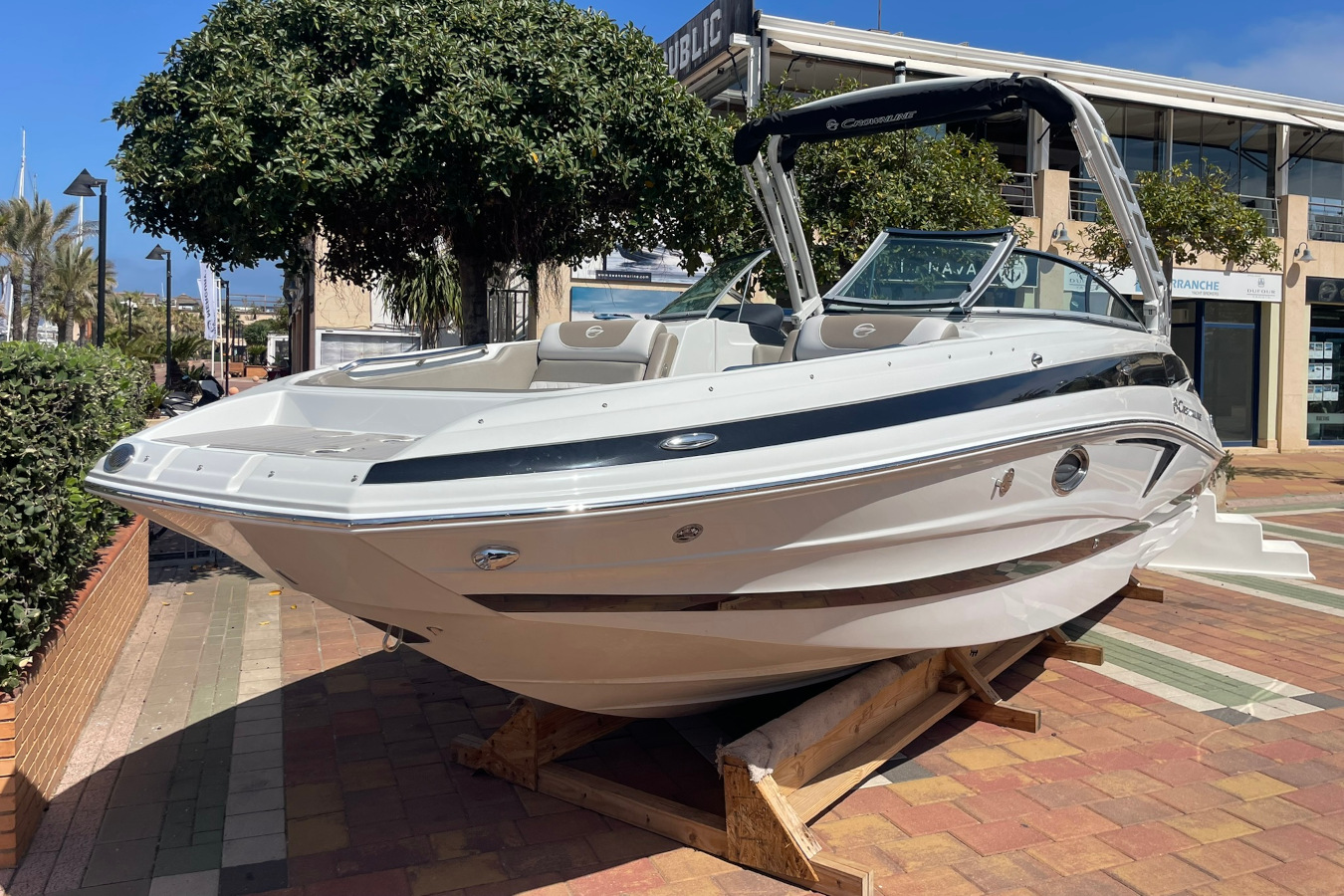
One of the primary factors in preventing osmosis issues is the quality of the hull’s construction. Crownline boats are built using F.A.S.T. Tab® Hull Design technology, an exclusive system that improves hydrodynamics and also provides superior structural sealing.
You can view the models available in our boats in stock section, where we have new units ready to sail and with structural guarantees.
Regular helmet inspections
Inspecting the helmet at least once a year is essential. Look for:
- Blisters or bubbles under the surface
- Discolouration or stains
- Soft-touch areas
You can carry out these checks yourself or contract them as part of our maintenance and assistance service, which includes preventive inspections and winterisation plans.
Proper winter storage prevents moisture
Leaving the boat afloat for months without use is a significant risk. Ideally, the boat should be taken out of the water for extended periods and stored in a dry place with good ventilation.
Please consult our services section to learn about our winter storage and hull inspection solutions, especially during the off-season.
Application of preventive epoxy barrier
One of the most effective treatments for preventing osmosis is to apply an epoxy barrier to a clean, dry hull. This coating seals the surface and prevents moisture penetration.
This procedure must be carried out with the boat out of the water, in controlled humidity conditions, and using professional marine-grade products.
Cleaning and drying after each season
Every time you take the boat out of the water, clean the hull with fresh water and allow it to dry completely before applying any products or putting it back in the water. This helps reduce the build-up of residual moisture.
Recommended models and additional resources
Crownline models resistant to osmosis
All Crownline models are manufactured using high-quality resins and advanced manufacturing controls. Some models, such as the Crownline 264 CR or the E305 XS, offer optimal structural features for those seeking durability, performance, and low maintenance.
If you are looking for a vessel built to last a lifetime on the water, check out our new boat category and choose a hull with a warranty.
External regulations and resources
Preventing osmosis is also considered good practice in marine conservation. See the RYA’s technical recommendations on fibreglass hull maintenance for further information.
Request an inspection or maintenance
From our services section, you can request a structural inspection, hull cleaning, antifouling treatment, or advice on applying an epoxy barrier.
Sail with peace of mind knowing that your boat is protected against one of the most common and costly structural problems in recreational boats.
Other news that may interest you
- Boat CE design category A, B, C or D: what does it mean and which one do you need?
- Is a joystick worth installing on a boat? Advantages, limitations and who benefits most
- How to calculate the real range of a boat before setting off
- How to keep your boat in excellent condition all year round
- Single or twin engines: which configuration makes more sense on a recreational boat?