 (+34) 966 425 961
 CONTACTO



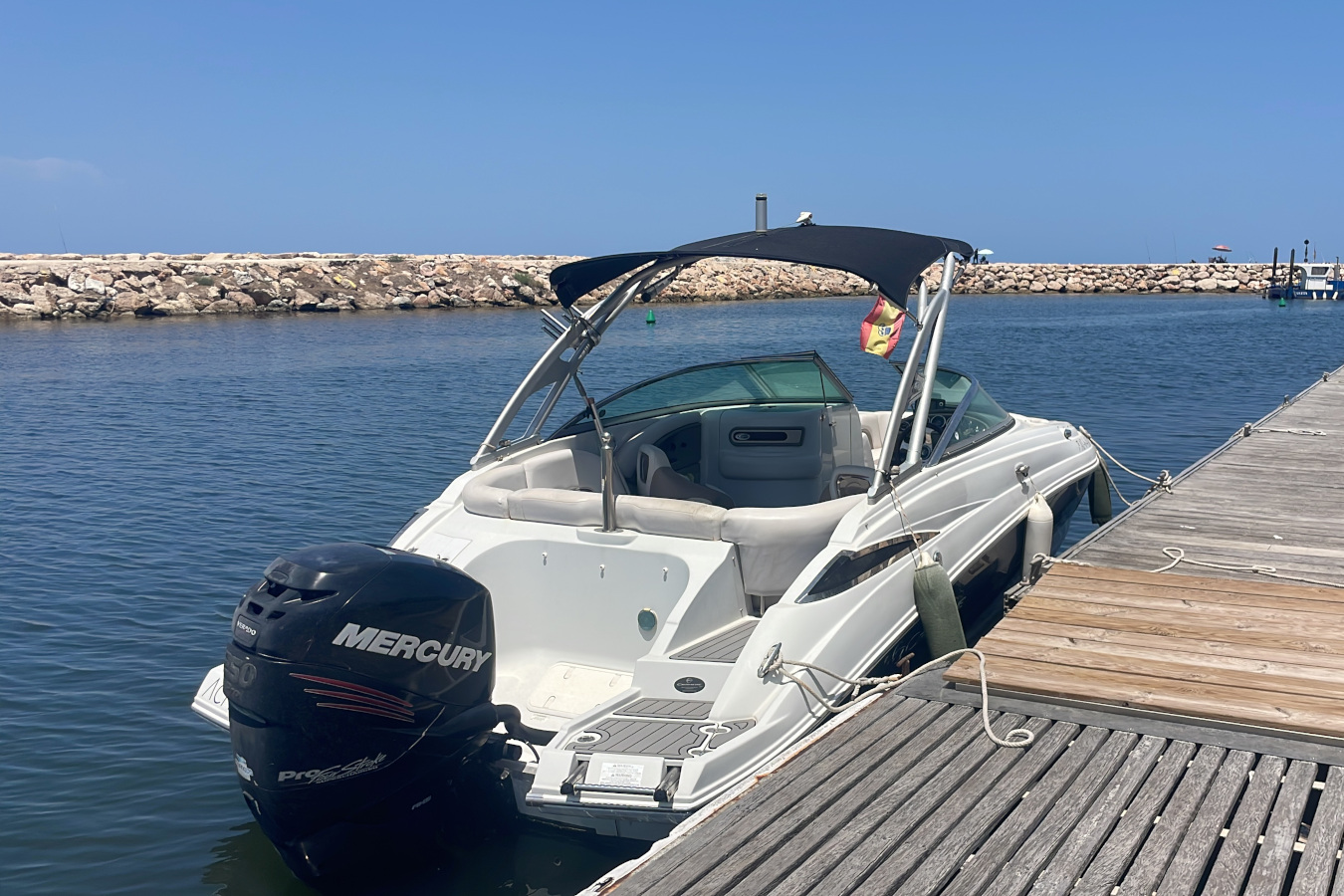
How to choose a comfortable boat for spending many hours at anchor in a cove
When you think about a boat for the Costa Blanca, it’s easy to focus on speed, design or power. But in practice, many owners find that much of the real enjoyment doesn’t come from sailing, but from mooring in a cove: swimming, eating on board, relaxing in the shade, paddleboarding, napping, listening to music and spending time with family or friends. Crownline Spain has already highlighted this in various articles on mooring, coves, family-friendly layouts and life on board, where comfort whilst the boat is moored emerges as a decisive factor in the purchasing decision.
That’s why the useful question isn’t just ‘which boat sails best’, but rather: which boat remains comfortable after three, four or five hours at anchor. That’s where priorities shift significantly. A model that looks very attractive in port may not be the most pleasant when you spend half a day in the sun, getting in and out of the water or constantly moving about on board. This logic fits particularly well with what Crownline Spain has already explained about which boat layout is best suited for sailing with the family on the Costa Blanca and what to bear in mind when mooring in Mediterranean coves.
Comfort whilst at anchor depends more on the layout than on the technical specifications
Many buyers still compare boats as if everything depended on length and engine power. But when the main use involves day trips and long hours at anchor, other factors carry more weight: how easy it is to get into the water, whether there is useful shade, whether the cockpit works well, whether the bow is put to good use, whether the boat rolls too much, and whether there is enough space to move about without feeling cramped. Crownline Spain already takes precisely this approach in its comparison of day cruisers and cuddy cabins, and in its article on deep-V hulls, where it even mentions that certain designs help to reduce rolling whilst at anchor.
This means that a comfortable boat for spending hours in a cove isn’t necessarily the largest one, but rather the one that best caters to life on board whilst at anchor. If you buy with only sailing in mind, you might get it right on the open sea but get it wrong when it comes to the very activity you’ll be doing most often in the summer. This is a practical conclusion supported by the pattern of content already published on the website, where anchoring, coves and layout are clearly emphasised.
What does a comfortable boat need to have if you’re going to spend many hours at anchor?
1. Spacious bathing platform and easy access to the water
When moored in a cove, the stern becomes one of the most frequently used areas of the boat. Whether you’re going for a swim several times, helping children onto the boat, getting in with fins or a surfboard, or simply sitting by the water’s edge, a comfortable swim platform makes a world of difference to the experience. Crownline Spain highlights this in its article on family-friendly layouts: much of the real enjoyment of the boat comes when it’s moored, and the swim platform is a key feature for Mediterranean use.
This also ties in with the correct way to anchor and choose a swimming spot. If the boat is to be used in this way, it is advisable to combine comfort with good technique; that is why it makes sense to cover here how to anchor a boat and anchoring in Posidonia beds: how to choose coves and protect the propeller and water intake.
2. Real shade during the middle of the day
A boat may look very open and attractive, but if it doesn’t provide adequate protection from the sun, long hours on board can become a real chore. When spending many hours at anchor, having useful shade in the cockpit is almost more important than an extra knot of top speed. Crownline Spain has already emphasised this criterion in several models designed for families, anchorage and practical use on the Costa Blanca.
A really useful external source here is AEMET, because the comfort of anchoring depends not only on the boat, but also on the sun’s position, the wind and the sea conditions on any given day. Checking AEMET’s official marine forecast before setting out helps to avoid uncomfortable anchorage due to gusts, swell or changes in the wind.
3. A well-designed bathtub for eating, sitting and socialising
If you’re going to be spending many hours at anchor, the cockpit can’t just be ‘adequate’; it has to be a proper social space. It needs to allow you to sit comfortably, move about without getting in each other’s way, put things down, eat in comfort and maintain a natural flow on board. Crownline Spain is already exploring precisely this concept in articles about spending weekends on a Crownline and about family-friendly layouts.
That’s why it’s worth weighing up this decision against which boat layout is best suited to sailing with your family along the Costa Blanca, and how to choose the right Crownline model to suit your lifestyle, because comfort in the cabin depends far more on the social space than on the general notion of a ‘pretty boat’.
4. A bow that’s actually used
On many boats, the bow is there, but it isn’t always used to its full potential. For long periods at anchor, a practical bow provides a second seating area and takes the pressure off the cockpit. This is particularly useful on trips with friends or family, where the more usable space there is, the better life on board is shared out. Crownline Spain has already incorporated this idea into its range of day cruisers and cuddy cabins, where outdoor comfort and the social area are key factors in the choice.
5. Good roll behaviour
This point is often overlooked when buying a boat, yet it becomes very noticeable when at anchor. A boat that is too prone to rolling can make dining, lying down or simply standing still for several hours a less pleasant experience. Crownline Spain mentions this when explaining what makes a deep-V hull special: certain hull features help to reduce rolling whilst at anchor and improve the feeling of stability.
This doesn’t mean there’s a ‘miracle’ helmet, but it does mean that comfort whilst standing also depends on the design below the waterline. If your priority is mooring and life on board, this detail matters more than it might seem.
What type of boat usually works best for this purpose?
If you plan to spend many hours in a cove, boats with a spacious open deck, a good cockpit, easy access to the water and a truly practical bow tend to work best. That’s why, in many Mediterranean scenarios, a well-designed daycruiser or bowrider can prove more satisfying than a boat that looks better ‘on paper’ but is less comfortable for socialising and anchoring. This view aligns with Crownline Spain’s approach to layout, life on board and day cruising.
If you also enjoy water sports or are looking for an experience closely linked to swimming and leisure, it’s worth checking what to bear in mind when choosing a boat for water sports and the Crownline range, as not all models are equally suited to this type of use.
The most common mistake: buying a boat to go out for 30 minutes and forgetting about the 5 hours spent at anchor
This is probably the most common mistake. Many buyers prioritise the driving experience or the technical specifications, whilst putting on the back burner what they’ll actually be doing most of the time: anchoring, swimming, eating, relaxing and spending time together. On the Costa Blanca, this pattern of use is so common that Crownline Spain has built a large part of its editorial content around coves, anchoring, family life and day trips.
Shopping becomes much more enjoyable when you ask yourself these questions before making a decision:
- Where will you spend most of your time: sailing or at anchor?
- How many people will be able to travel comfortably on board without feeling cramped?
- Is there enough shade for June, July and August?
- Will it be easy to get in and out of the water ten times in a single day?
If you can’t answer that properly, you’re not yet looking at the right boat for spending many hours at anchor.
Our recommendation at Crownline Spain
If your ideal sailing experience is more like a long day in a cove than a quick trip between ports, it’s far more worthwhile to choose a boat based on its practical comfort than on its image or isolated figures. The most sensible approach is to weigh up the layout, shade, access to the water, bow, stability at anchor and social space. This approach ties in perfectly with articles we’ve already published, such as which boat layout is best for sailing with the family on the Costa Blanca, how to anchor a boat and what to bear in mind when anchoring in Mediterranean coves.
The best thing to do is to browse the Crownline range, compare boats in stock and, if you’ve already decided how you want to sail, get in touch with Crownline Spain to work out which layout and model best suit your cabin plans.
Frequently asked questions
What is the most important thing on a boat when you’re moored for many hours?
Typically, this combination includes a swimming platform, practical shade, a comfortable cockpit, a good bow and pleasant rolling behaviour. Crownline Spain addresses precisely these factors when discussing family-friendly layouts and deep-V hulls.
Is an open boat or one with a larger cabin better value for money?
It depends on how you use it, but for plenty of day trips and long stays at anchor in a cove, a well-designed open-plan layout tends to be more practical. This logic is evident in the comparison between daycruisers and cuddy cabins published by Crownline Spain.
Is shade really that important on the Costa Blanca?
Yes. On long summer days, shade really does make a difference to comfort on board. What’s more, AEMET allows you to check the marine forecast and conditions before setting out.
Does the hull affect comfort whilst at anchor?
Yes. The boat’s roll behaviour affects how pleasant it is to eat, rest or move about on board when the boat is at anchor. Crownline Spain mentions this when explaining the practical advantages of the deep-V hull.
Which articles on this site are worth reading alongside this one?
The most useful tips would be how to anchor a boat, what to bear in mind when anchoring in Mediterranean coves, and which boat layout is best suited for sailing with the family along the Costa Blanca.
Other news you might find interesting
- Boat CE design category A, B, C or D: what does it mean and which one do you need?
- Is a joystick worth installing on a boat? Advantages, limitations and who benefits most
- How to calculate the real range of a boat before setting off
- How to keep your boat in excellent condition all year round
- Single or twin engines: which configuration makes more sense on a recreational boat?