 (+34) 966 425 961
 CONTACTO



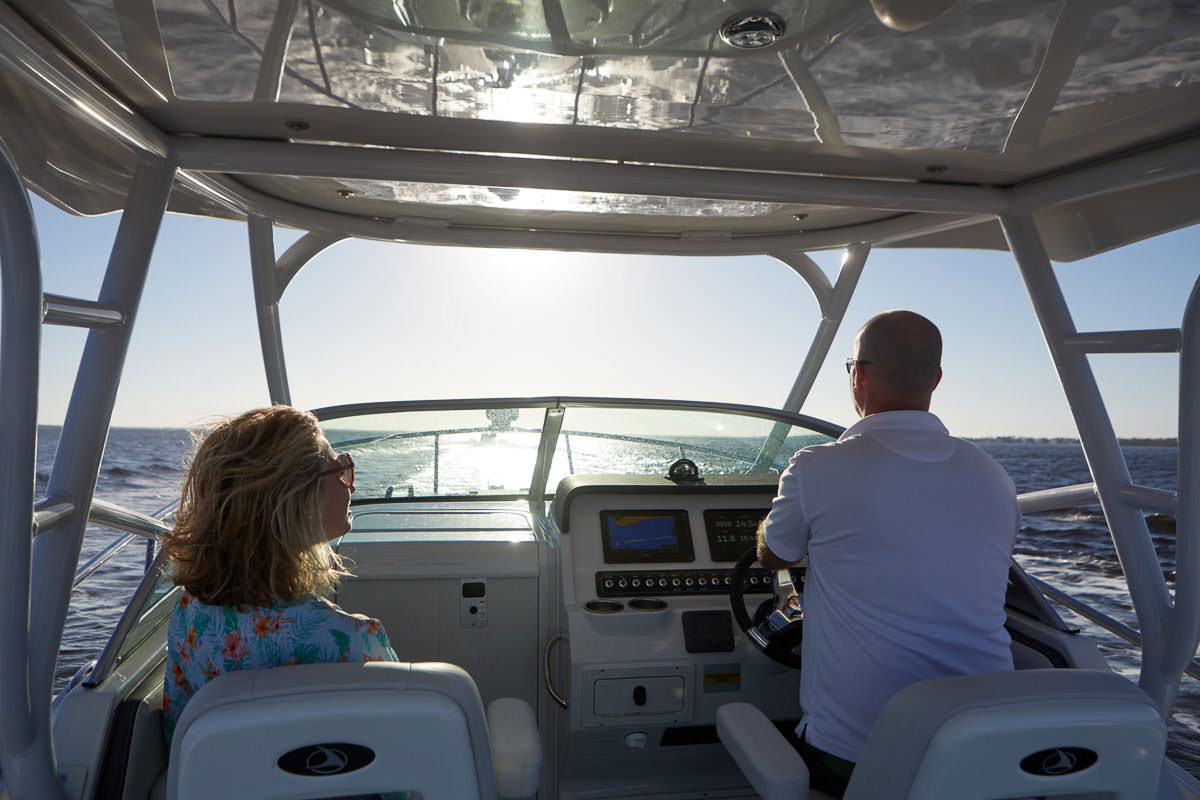
Dénia–Formentera crossing on a day cruiser: route, weather and fuel consumption step by step
Crossing from Dénia to Formentera on a Crownline day cruiser is an iconic Mediterranean voyage. With favourable weather conditions, a clear route and fuel consumption under control, you can enjoy turquoise coves in complete safety.
1) Planning: vessel, cargo, and actual range
Before setting a date, review three key points:
- Boat and configuration: suitable propeller (allowing the manufacturer’s WOT rpm to be reached), operational trim tabs and up-to-date maintenance. If you still choose a unit, compare layouts in the Crownline SS series (fast bowriders) and Sport Cruiser (more comfortable anchoring).
- Weight distribution: passengers, water, refrigerator, fenders and anchoring equipment. Avoid overloading the bow.
- Autonomy: estimate consumption per hour (L/h) and per mile (L/NM) at your usual cruising speed. Add a 20–30% margin for rough seas, detours and waiting times in La Savina.
Tip: if you are looking for a vessel ready to sail this season, check out the boats in stock and request a sea trial with real cargo.
2) Weather and departure window
The Dénia–Formentera stretch is exposed to the Levante wind and swell. To plan ahead:
- Prioritise light winds and low significant waves for efficient cruising.
- Check wind, wave and visibility conditions for the next 48–72 hours.
- Have a plan B (return to port or detour to Ibiza) if the weather worsens.
For safety and notices to mariners, consult the recommendations of the Maritime Rescue Service: Guide and safety notices at sea (external).
3) Step-by-step route (approximate route)
Approximate distance: ~55–70 NM depending on the chosen route and port/mooring in Dénia.
- Departure from Dénia (marina/port) and course E–SE to the open sea.
- Heading to Formentera: adjust to the weather conditions of the day to avoid rough seas.
- Approach to La Savina (port traffic control) or anchorage in coves on the west-north side of the island (Espalmador, Illetes), respecting the Posidonia seagrass and regulated areas.
- If the weather changes, alternative Ibiza (leeward sanctuaries) and return when it improves.
Smart navigation: avoid sailing ‘against the wave’; adjust trim to reduce pitching and spray. Maintain cruising speed at your efficient plateau (stable rpm with the lowest L/NM).
4) Consumption: practical calculation with your day cruiser
- Measure at a previous exit (similar sea):
- Ralentí: estabilidad y dB.
- Economical cruising: note rpm, knots and L/h.
- Fast cruising: confirm L/NM and efficient trim.
- Estimate for the journey:
- Base consumption (L) = Distance (NM) × L/NM on your cruise.
- Tactical reserve (L) = 20–30% of base consumption.
- Total to be loaded (L) = Base consumption + Reserve.
- If you make stops and anchor, add up the hours of idling (refrigerator, audio, electronics) and short trips.
Guideline example (not binding): if your efficient cruiser yields 1.3–1.6 L/NM, for 60 NM calculate 78–96 L as a base. With a 30% reserve: ~101–125 L. Adjust for weather and load.
5) Safety, mooring and life on board
- Equipment: life jackets, valid pyrotechnics, VHF with MMSI, automatic and manual bilge pump, first aid kit and regulatory lights.
- Electronics: updated chart, route plotting, depth sounder alarms and escape waypoints.
- Anchoring: avoid Posidonia. In Formentera there are specific regulations for anchoring; respect buoys/authorised areas.
- Comfort: bimini top/hardtop, deck shower, fender storage, and dB control for comfortable conversation at cruising speed.
6) Departure checklist (express)
Engines and power: levels, cold start, charging voltage, batteries in good condition.
Weather forecast: 48–72 hour window verified.
Course and reserves: primary route + alternative, fuel + 20–30% extra.
Documentation and insurance: on board and valid.
Communication: report estimated time of arrival (ETA) to a contact person.
7) Shall we help you prepare for the journey?
We can review actual consumption, suggest routes and anchorages, and adjust the configuration of your Crownline for a more comfortable journey.
- Want to start this season with something new? Consider purchasing a new boat in Dénia.
- If you prefer maximum ease of maintenance, discover the Crownline outboard range.
- Ready to plan your trip and book a visit? Contact us / Schedule your consultation.
Frequently asked questions
What is the distance between Dénia and Formentera, and how long does it take?
Depending on the route, between 55 and 70 nautical miles. In an efficient day cruiser (18–26 knots), allow 2.5–4 hours plus manoeuvring and anchoring.
What weather conditions do I consider ‘optimal’ for crossing?
Light winds and low, stable waves for 48–72 hours (outward journey and possible return). Avoid sudden changes in wind direction/wave period.
How much fuel should I bring?
Add 20–30% to your estimated consumption to cover rough seas, detours, waiting times in La Savina, and anchorage transfers.
What speed is recommended for comfortable and efficient crossing?
Maintain your efficient plateau: stable rpm with lower L/NM. If the hull hits or spray increases, lower slightly and correct the trim.
Can you anchor freely in Formentera?
There are regulated areas and Posidonia protection. Use authorised buoys where available and check the seabed and winds for the day before dropping anchor.
What minimum safety equipment must I carry?
Life jackets, valid flares, VHF with MMSI, automatic and manual bilge pump, first aid kit, regulation lights and basic on-board tools.
What should I do if the weather worsens halfway through the crossing?
Reduce speed to a safe cruising speed, correct your course to seek leeway (e.g., the coast of Ibiza), report your ETA and conditions by VHF, and decide whether to wait or return.
Is there fuel available in Formentera?
Yes, but there may be delays during peak season. Make sure you have plenty of fuel when you arrive and plan to refuel outside of peak hours or at nearby alternatives (Ibiza).
What documentation should I carry on board?
Qualification certificate, boat documentation and insurance, valid certificates and updated charts/plotter. Notify a contact of your sailing plan and ETA.
Is it better to set off at dawn or mid-morning?
Choose the best weather window. At dawn, the sea is usually calmer, but always prioritise safety and adequate visibility for your crew.
Other news that may interest you
- Is a joystick worth installing on a boat? Advantages, limitations and who benefits most
- How to calculate the real range of a boat before setting off
- How to keep your boat in excellent condition all year round
- Single or twin engines: which configuration makes more sense on a recreational boat?
- How many engine hours are a lot on a used boat? How to interpret actual use