 (+34) 966 425 961
 CONTACTO



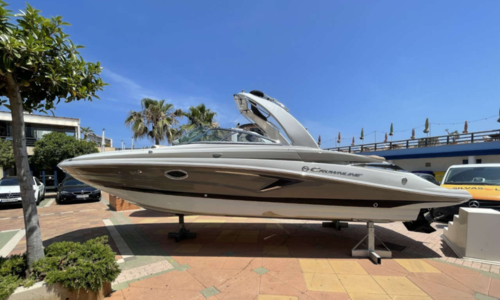
Why do boats float?
Boats float because their hull displaces enough water to offset the vessel’s total weight. This phenomenon is explained by Archimedes’ principle, a fundamental law of physics in navigation: any object submerged in a fluid experiences an upward force equal to the weight of the fluid it displaces.
Put simply: a boat floats because it is designed to ‘displace’ water. Although it may be built from heavy materials such as fibreglass, metal and wood, and fitted with engines, fuel tanks and nautical equipment, its shape allows that weight to be distributed over a large volume. It is this combination of weight, volume, hull and water displacement that keeps the boat afloat.
In recreational boating, however, it is not enough for a boat simply to float. A good boat must also offer stability, safety, efficiency and comfort, especially when sailing in areas such as the Costa Blanca, where sea conditions can range from a peaceful family outing to a trip in moderate swells.
Why do ships float even though they’re so heavy?
Boats float because they displace water. When a boat enters the water, its hull pushes some of the water out to the sides and downwards. This displaced water generates an upward buoyant force that helps to support the boat’s weight.
The key lies not only in the material the boat is made of, but also in its shape, volume and weight distribution. A solid piece of metal can sink because it concentrates a lot of weight within a small volume. A boat, on the other hand, has a wide hull designed to displace enough water to generate buoyancy.
That is why a vessel weighing several tonnes can stay afloat, whereas a small, dense object can sink quickly.
Archimedes’ principle: the physical explanation of why a ship floats
Archimedes’ principle states that any body that is fully or partially submerged in a fluid experiences an upward force equal to the weight of the fluid displaced.
In the context of navigation, this means that a boat floats when the water it displaces weighs the same as, or more than, the boat itself. If the buoyancy of the water balances the weight of the boat, it stays afloat.
This principle explains why a boat can float even if it is made of heavy materials. The secret lies in the fact that the hull increases the total volume of the structure and reduces its average density.
In practical terms, buoyancy depends on three main factors:
- The total weight of the boat.
- The volume of water displaced by the hull.
- The correct distribution of the load on board.
The difference between floating and sinking: weight, volume and density
To understand why ships float, you need to distinguish between weight and density.
Weight indicates how much an object weighs. Density, on the other hand, relates that weight to the volume it occupies. A very heavy object can float if it has enough volume to displace a large amount of water. That is why a boat can float and a compact piece of steel can sink.
A simple example: if a solid metal ball is thrown into water, it sinks because it displaces very little water in relation to its weight. If that same metal is shaped into a large, hollow, hull-shaped structure, it can displace much more water and stay afloat.
In marine engineering, this relationship between weight, volume and buoyancy is essential for designing safe and efficient vessels.
What role does the hull play in a ship’s buoyancy?
The hull is one of the most important elements in ensuring that a boat floats properly. Not only does it act as the boat’s main structure, but it also determines how it sits on the water, how it displaces the necessary volume, and how it behaves whilst underway.
If you’d like to find out more about this topic, you can read our guide on what a ship’s hull is, where we explain its function, its main parts and its importance for safety on board.
A well-designed helmet must fulfil several functions at the same time:
- Displace enough water to keep the boat afloat.
- Distribute the boat’s weight evenly.
- To provide lateral stability.
- Reduce rolling resistance.
- Improving comfort whilst sailing.
- Handle waves, wind and changes in load with confidence.
That is why, when choosing a boat, it is not enough to look only at its length, engine power or exterior design. The type of hull has a direct impact on the sailing experience.
What is a ship’s displacement and why is it key to staying afloat?
The displacement of a boat is the volume of water displaced by the hull when the boat is afloat. The greater the volume of water displaced, the greater the upward thrust exerted on the boat.
When we add weight on board — passengers, fuel, fresh water, equipment or cargo — the boat sinks slightly deeper into the water. As it does so, it displaces more water and generates more thrust until it regains its balance.
There is a limit to this balance. That is why all boats have a recommended maximum capacity for passengers and cargo. Exceeding this capacity can affect the waterline, stability and safety.
On recreational craft, adhering to load limits is essential to ensure safe performance when sailing, anchoring and manoeuvring.
What is a ship’s waterline?
The waterline is the part of the hull where the water meets the boat when it is fully loaded under normal conditions. It is a very important visual reference for checking how the boat sits on the water.
If the waterline is too low, this may indicate overloading, poor weight distribution or water ingress. If the boat appears to be listing to one side, there may be an imbalance in weight distribution or a problem with watertight integrity.
Before setting sail, it is a good idea to check the waterline and ensure that the boat is sitting level. It is a simple check that can help identify any potential issues before leaving port.
Why a boat must not only float, but also be stable
Floating is essential, but it is not enough. A boat must also be stable.
A ship’s stability is its ability to remain balanced and return to its natural position after listing due to the effect of wind, waves, a manoeuvre or the movement of passengers.
Several factors contribute to this stability:
- The beam of the boat.
- The shape of the helmet.
- The height of the centre of gravity.
- Weight distribution.
- The position of the engine or engines.
- The keel.
- The type of sailing for which the boat has been designed.
The keel also plays a significant role in a boat’s performance. In this article on what a boat’s keel is, we explain how it helps to improve the boat’s stability, course and handling.
A family boat, for example, must be safe to move around on deck, stable when stationary and comfortable when at anchor. A sports boat, moreover, must perform well when accelerating, planing and turning.
How does the design of the hull affect navigation?
In sports and leisure boats, the hull does not merely affect buoyancy; it also plays a major role in the sailing experience.
A well-designed hull helps the boat plane efficiently, better absorb the impact of the waves, maintain a steady course and give the skipper a sense of security. This is particularly important for boats used for family outings, water sports, fishing or coastal cruising.
V-shaped hulls, for example, are designed to cut through the water more effectively and provide a smoother ride when the sea isn’t completely calm. If you’re interested in this topic, we recommend reading our explanation of what makes a deep-V hull special.
In premium boats, the hull design is combined with optimal weight distribution, high-quality materials, suitable engine power and a layout tailored to the owner’s actual use.
Buoyancy and safety on pleasure craft
A boat’s buoyancy does not depend solely on the hull being well designed. It also requires maintenance, servicing and responsible use.
Before setting sail, it is advisable to check that there is no water accumulated in the bilge, that the bilge pump is working properly, that the drain plugs are securely in place, and that the load is evenly distributed.
It is also important not to exceed the maximum passenger capacity, to check the visible condition of the hull, and to ensure that the mandatory safety equipment is on board and in good working order.
A well-maintained boat retains its sailing performance, buoyancy and safety features more effectively. To find out more, you can read our tips on basic boat maintenance or learn how an automatic bilge pump system works on a boat.
At Crownline Spain, we also offer marine services in Dénia designed to ensure that every boat remains in top condition throughout the season.
Why understanding buoyancy helps you choose a boat more effectively
Understanding why boats float helps you make better purchasing decisions. Not all models offer the same stability, comfort or handling on the water.
Before choosing a boat, it is worth considering how you intend to use it: family outings, fishing, water sports, coastal cruising or weekend getaways. You should also consider your usual sailing area, the number of people on board, the type of hull, the engine, maintenance requirements and the after-sales service available.
At Crownline Spain, based in Marina de Dénia, we advise each customer on choosing the right model to suit their sailing style. You can find out about the different options available in our Crownline range or view the boats currently in stock at Crownline Spain.
Choosing the right hull, length and engine is just as important as choosing the design or the equipment. A good decision makes a difference every time you head out to sea.
How buoyancy is applied in Crownline boats
On a Crownline boat, buoyancy is part of a wider package: hull design, performance, comfort, safety and the on-board experience.
Crownline boats are designed for boaters looking for more than just a way to get around on the water. They are boats designed to provide a stable and comfortable ride for family outings, water sports, anchoring in coves, fishing trips or coastal getaways.
Looking for a boat for wakeboarding is not the same as looking for a family boat to moor in Jávea, Moraira, Altea or Dénia. Nor is choosing a model for sport fishing the same as choosing a boat designed for coastal cruising.
That’s why, as well as understanding why a boat floats, it’s important to consider how it handles, how it responds to waves, how its space is laid out, and how it feels to the skipper. If you’re in the process of choosing a boat, this guide on how to choose the perfect one can help you better define your priorities.
Tips for maintaining your boat’s buoyancy and safety
Keeping a boat in good condition is essential for maintaining its safety, stability and performance. These recommendations will help you prevent problems before setting sail.
Check the bilge before setting sail
Water in the bilge may indicate leaks, condensation, faulty connections or a malfunction in the bilge pump system. Regular checks help to prevent more serious problems.
Do not exceed the maximum recommended load
Every boat has a maximum capacity for passengers and cargo. Exceeding this limit can affect the waterline, increase fuel consumption, reduce stability and compromise safety.
Distribute the weight evenly on board
Avoid concentrating too much weight at the bow, stern or on one side. A balanced distribution improves the boat’s stability, comfort and handling.
Keep your helmet clean and in good condition
Impacts, cracks, osmosis or built-up dirt can affect performance. The hull should be inspected, cleaned and protected using appropriate treatments.
Check the bilge system
The drainage system is essential for removing accumulated water. It must function properly, be free of blockages and be checked regularly.
Consult with nautical specialists
A pre-season technical inspection can help prevent problems and improve safety on board. If you need personalised advice, please contact Crownline Spain and our team will be happy to answer any questions you may have.
Quick summary: why ships float
Boats float because their hull displaces enough water to generate an upward force that counterbalances their weight. This phenomenon is explained by Archimedes’ principle.
The key lies not only in the boat’s material, but in the combination of design, volume, weight distribution and stability. That is why a solid piece of metal can sink, whilst a much heavier vessel can sail safely.
In recreational boats, buoyancy must go hand in hand with good hull design, proper maintenance and a responsible choice of model. A boat must not only float: it must do so safely, stably and comfortably.
Frequently asked questions about why ships float
Why do ships float when they’re so heavy?
Boats float because their hull displaces a volume of water whose weight balances out the total weight of the vessel. Even if the boat is heavy, its shape and volume generate enough buoyancy to keep it afloat.
What is Archimedes’ principle in relation to a boat?
Archimedes’ principle states that any object submerged in a fluid experiences an upward force equal to the weight of the fluid it displaces. In a boat, it is this force that allows the hull to stay afloat.
Why does a piece of metal sink but a boat doesn’t?
A solid piece of metal has a high density and displaces little water in relation to its weight. A boat, on the other hand, has a wide, hollow hull that displaces a much greater volume of water, thereby reducing the average density of the whole.
Does the material the boat is made of affect its buoyancy?
Yes, but that’s not the only factor. The hull shape, volume, weight distribution, load, engine power and the boat’s overall condition also play a part.
What happens if a boat is carrying too much weight?
If a boat exceeds its recommended load, it may sink deeper than expected, lose stability, list, consume more fuel and handle waves or manoeuvres less effectively. In extreme cases, excess weight can compromise safety.
What makes a boat stable?
Stability depends on the hull’s beam, shape, centre of gravity, keel, weight distribution and overall design. A stable boat maintains its balance better and returns to its natural position after listing.
How important is a helmet when sailing?
The hull is crucial. It determines how the boat floats, how it cuts through the water, how it handles waves, how it planes, and how comfortable it is to sail.
What type of helmet is best for sailing in the Mediterranean?
It depends on the intended use. For recreational sailing in the Mediterranean, stable, safe and efficient hulls are generally preferred, capable of providing comfort both on calm outings and in choppy seas.
Are you looking for a safe, stable boat that’s perfect for enjoying the Mediterranean?
At Crownline Spain, based in Marina de Dénia, we’ll advise you on choosing the model that best suits your sailing style. We’ll help you assess the hull type, length, engine specifications, equipment and the actual use you intend to make of your boat.
Discover our range of Crownline boats, view the boats currently in stock, or book a visit with Crownline Spain for personalised advice.
Other news that may interest you
- How to keep your boat in excellent condition all year round
- Single or twin engines: which configuration makes more sense on a recreational boat?
- How many engine hours are a lot on a used boat? How to interpret actual use
- How to choose a boat that will be easy to resell in Spain in a few years
- When is it worth buying a boat before the summer, and when is it better to wait until the end of the season?