 (+34) 966 425 961
 CONTACTO



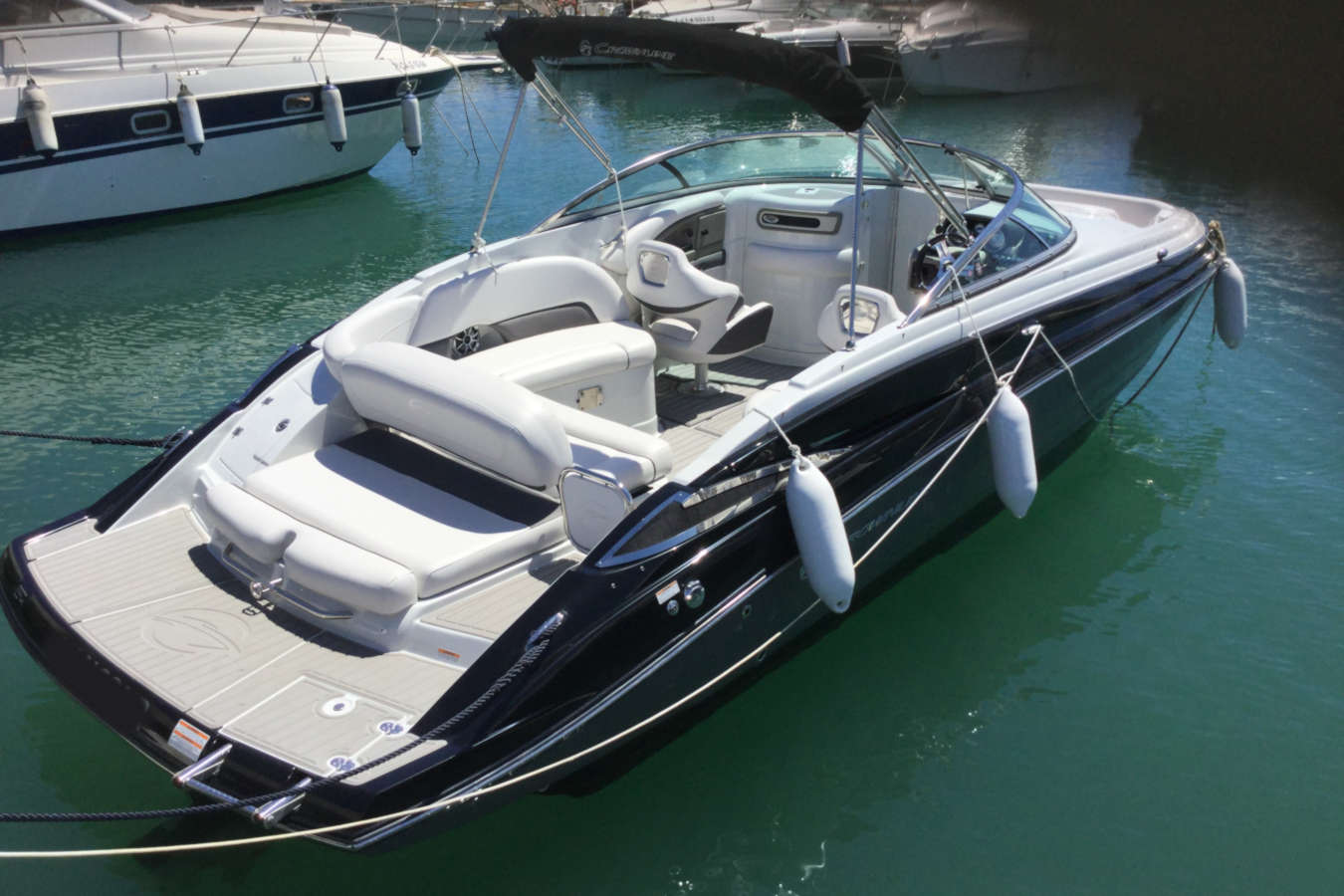
Overall length, hull length and beam: which measurements matter when buying a boat
When you compare two boats, the first figure you usually look at is length. It seems logical: an 8-metre boat should be bigger than a 7.5-metre boat.
In practice, the comparison is not always that simple.
A specification sheet may mention overall length, hull length, maximum beam, draft or length including the swim platform, and two boats that appear similar on paper can offer very different amounts of usable space on board.
Before buying, it is therefore worth understanding what each measurement really means and which ones affect important factors such as:
berthing, usable space, stability, manoeuvrability, transport and ownership costs.
The key idea is this:
Overall length tells you how long the boat is from end to end, hull length helps you understand the size of the main structure itself, and beam tells you how much width the boat occupies. None of these figures should be interpreted on its own.
What does overall length mean on a boat?
Overall length is the maximum length of the boat from bow to stern according to the measurement method used by the manufacturer.
On many technical and commercial specification sheets, it is one of the most prominent figures because it gives a quick impression of the boat’s general size.
However, depending on the design, it may include elements that are not strictly part of the hull itself.
These may include:
swim platforms, stern extensions, bow fittings, engine brackets or other external components.
That is why two boats with almost the same overall length do not necessarily have the same hull length or the same amount of usable space.
What is hull length?
Hull length refers to the length of the main hull structure, excluding certain external elements depending on the measurement method used.
This figure can be especially useful when comparing two boats with very different swim platforms or external extensions.
Imagine two models both advertised as being around 8 metres long.
One may have a large integrated swim platform.
The other may devote a greater proportion of those 8 metres to the actual hull.
On paper, both are “8-metre boats”.
In real use, they can feel very different.
That is why, when comparing models in the Crownline range, it is worth looking beyond the headline length figure.
Overall length and hull length answer different questions
Overall length helps you understand the boat’s total external dimensions.
Hull length helps you interpret the size and proportions of the main structure.
Overall length is particularly relevant for:
berthing, storage, transport and overall space occupied.
Hull length may be more useful when you want to:
compare hull proportions and structural differences between models.
Neither figure replaces seeing the boat in person.
A boat may be longer overall and still offer less cockpit space, narrower walkways or a layout that is less suitable for your use.
What does beam mean on a boat?
The beam is the maximum width of the boat.
It is one of the most important dimensions on a specification sheet, yet many buyers still look at it only after length.
Beam directly affects:
- interior space;
- cockpit width;
- stability;
- movement around the boat;
- passenger comfort;
- berth width requirements.
Two boats with the same length can feel completely different if one has a noticeably wider beam.
A wider boat can provide more usable space, but it can also affect:
berthing, certain types of transport and manoeuvring in tight spaces.
So you should not assume:
“wider = better”.
The beam needs to suit both your intended use and your home marina.
Why a few centimetres of beam can make a noticeable difference
A difference of 20 or 30 centimetres may look minor on a specification sheet.
On board, it can be very noticeable.
That extra width may translate into:
wider seats, easier passageways, a larger cockpit or a better-integrated helm console.
In some cases, a slightly shorter but wider boat may feel more spacious than a longer one.
That is why:
more length does not always mean more space.
The relationship between length, beam and layout is much more important.
Which matters more: length or beam?
It depends on how you plan to use the boat.
If your main limitation is the berth, both measurements are critical.
If you mainly boat with family and guests, beam and layout may have more impact on day-to-day comfort than a few extra centimetres of length.
If performance matters, you also need to consider:
weight, hull shape and engine configuration.
So the most useful question is not simply:
“How long is the boat?”
It is:
“How well are those dimensions used?”
How do these dimensions affect your berth?
This is one of the most important reasons to check dimensions carefully before buying.
A marina does not work with an abstract idea of boat size.
It works with real measurements.
A small difference can affect:
- berth availability;
- price;
- side clearance;
- ease of manoeuvring;
- compatibility with the pontoon or berth.
Before buying, it is therefore worth asking the marina exactly which measurements it uses to allocate and price berths.
Do not automatically assume that the commercial length shown by the manufacturer is exactly the same figure used by the marina.
A swim platform can increase overall length without changing hull length
This is particularly relevant on modern recreational boats.
A large swim platform can improve the experience on board significantly.
It makes it easier to:
enter and leave the water, prepare for watersports, sit close to the sea and board from the pontoon.
But it can also increase the boat’s total length.
When comparing two models, look at how much of the overall length is actually taken up by:
hull, swim platform and genuinely usable areas.
This is not necessarily an advantage or disadvantage.
It simply shows how the manufacturer has distributed the total length.
Commercial boat length does not always explain how spacious the boat feels
A boat may be advertised as 8 metres long and offer a very open layout.
Another model with almost the same length may devote more space to:
a cabin, helm console, storage or technical areas.
The specification sheet helps you shortlist models.
The layout tells you how you will actually use the space.
That is why technical dimensions should always be combined with a real inspection of the boat.
Beam also affects the way a boat behaves
Beam does not only affect space.
It is part of the overall hull design.
It can influence:
- stability;
- weight distribution;
- support area;
- behaviour at rest;
- response in certain turns.
But it is important to avoid oversimplifying.
A wider boat is not automatically more stable in every situation.
Real behaviour also depends on:
weight, centre of gravity, hull geometry, deadrise, load and weight distribution.
Length and beam should be considered together with weight
This is where technical dimensions start to become genuinely useful.
Three figures such as:
8.0 m length + 2.60 m beam + 2,400 kg
tell you far more than simply:
“an 8-metre boat”.
Weight affects:
inertia, required power, acceleration, behaviour in waves, transport and fuel consumption.
Comparing only length and beam can therefore lead to the wrong conclusion.
Bigger does not automatically mean better
A larger boat may offer:
more space, more capacity and a greater sense of volume.
But it may also mean:
a more expensive berth, more weight, larger engines, higher fuel consumption and more demanding manoeuvres.
The right question is not:
“Which boat is bigger?”
It is:
“Which boat is the right size for the way I will use it?”
If you are still at that stage of the buying process, see our guide on how to choose the perfect boat.
Which dimensions matter most for a family boat?
On a family boat, the most useful centimetres are the ones that become real living space.
Pay particular attention to:
cockpit width, passage between seats, access to the bow, swim platform and storage.
A slightly smaller boat with a more efficient layout can work much better for a family.
You can also read our guide on what is the best type of boat for a family sailing trip along the Costa Blanca?.
Which dimensions matter most if you spend a lot of time at anchor?
If your normal use is:
marina → cove → anchor → return,
overall length matters less if it does not translate into genuinely usable areas.
In this case, pay more attention to:
cockpit space, swim platform, beam, shade, layout and storage.
A boat designed for socialising and swimming may suit this use better than a longer model with less efficient outdoor space.
Which dimensions matter for day boating on the Costa Blanca?
Many owners on the Costa Blanca mainly use their boats for day trips:
leave the marina, cruise for a few hours, visit a cove or restaurant, and return the same day.
For this type of use, a very large boat is not automatically an advantage.
It may be more useful to find a balance between:
easy-to-handle size + comfortable beam + good outdoor space + suitable engine power + reasonable fuel consumption.
The size should serve your boating programme.
Not the other way around.
How to compare two boats of similar length properly
Imagine two models around eight metres long.
The first has:
8.10 m overall length and 2.50 m beam.
The second has:
8.00 m overall length and 2.65 m beam.
At first glance, the first one may appear “bigger”.
But the second could offer:
a wider cockpit, more usable floor area and greater space between seats.
To decide which one is really bigger for you, you need to look at how the dimensions are used.
Length alone does not answer the question.
Which measurements should you use to compare models?
For an initial comparison, look at several figures together:
overall length + hull length + beam + weight + layout.
Then add:
engine configuration + fuel capacity + passenger capacity + CE category.
This prevents you from comparing two boats purely on the basis of one headline figure.
How do length and beam affect berth costs?
In many marinas, the dimensions of the boat directly influence the size of berth required.
A greater length or beam may mean:
- moving into a different berth category;
- lower availability;
- higher annual fees.
A few extra centimetres can therefore have a greater financial impact than you might expect.
This should be considered as part of the total cost of ownership before buying.
How do dimensions affect road transport?
If you plan to transport the boat by road, beam becomes even more important.
Road transport is subject to dimensional limits and specific requirements.
It is not enough to know whether the boat’s weight is compatible with a trailer.
You also need to check the actual width.
If regular road transport is part of your plans, it is worth confirming the relevant requirements before buying.
What does “7-metre boat” or “8-metre boat” really mean?
In everyday sales language, boats are often grouped by approximate length:
7-metre boats, 8-metre boats, 9-metre boats.
This is useful as a first filter.
But it should not be treated as an exact category for space or performance.
Two boats in the same “length class” can differ significantly in:
- beam;
- weight;
- hull design;
- horsepower;
- capacity;
- layout.
Use length as a starting point.
Not as a final conclusion.
How many centimetres of difference can you actually feel?
It depends on where those centimetres are.
An extra 30 cm on a swim platform can make access to the water much easier.
An extra 20 cm of beam can be noticeable in the cockpit.
An extra 30 cm of length devoted to a technical area may be almost invisible to passengers.
So when comparing dimensions, ask:
“Where are those extra centimetres actually being used?”
That is often much more useful than simply asking which boat is longer.
How does engine layout affect usable space?
The propulsion setup can also change the way space is distributed.
Outboard engines take up space at the stern outside the main hull, while other propulsion layouts place more components inside the boat.
There is no universally better option.
Each architecture changes:
weight, space, swim platform design, maintenance and access.
If you are comparing different propulsion systems, see our guide on outboard or inboard: advantages of each system in recreational boating.
Length and horsepower do not always increase at the same rate
A slightly longer boat does not automatically need only slightly more power.
Required horsepower also depends on:
weight, hull design, load and desired speed.
So the relationship between size and engine cannot be reduced to:
“more metres = more horsepower”.
The engine setup should always suit the specific boat and intended use.
Length and CE category are not the same thing either
A longer boat does not automatically have a higher CE design category.
The CE category depends on the conditions the boat was designed for and the relevant design requirements.
In simple terms:
more length ≠ higher CE category.
This figure needs to be checked separately for each model.
What should you look at on a Crownline specification sheet?
When comparing Crownline models, do not stop at the advertised length.
Look at these figures together:
length + beam + weight + capacity + fuel tank + engine configuration + CE category + layout.
Then look at how those numbers translate into the actual boat.
You can compare the Crownline model range and the boats currently in stock.
The final test is still stepping on board
Specifications help you narrow down the options.
But no data sheet can fully tell you:
how wide a walkway feels, how comfortable the seats are, how easy it is to reach the water, how spacious the boat feels, how good the visibility is or how easy it is to move around.
So after comparing dimensions, step on board.
Sit in the places you would actually use.
Walk from bow to stern.
Open storage compartments.
Try the swim platform.
That is when the numbers start to make real sense.
Frequently asked questions about boat length and beam
What is the difference between overall length and hull length?
Overall length is the maximum length of the boat according to the measurement method used, while hull length focuses on the main hull structure itself. The difference may come from swim platforms, extensions or other external components.
What does beam mean on a boat?
Beam is the maximum width of the boat. It affects usable space, layout, berth requirements and certain aspects of handling.
Which measurement is used to calculate berth fees?
It depends on the marina and its own measurement and pricing system. Before buying, ask the marina directly which dimensions it uses for berth allocation and fees.
Does a longer boat always have more space?
No. Beam and layout can allow a shorter boat to offer more usable or better-organised space.
Does a wider beam automatically mean more stability?
Beam can affect stability, but it is not the only factor. Hull shape, weight, centre of gravity and load distribution also play an important role.
Which matters more when buying: length or beam?
Both matter. Length helps you understand the overall size and berth requirements, while beam has a major influence on transverse space. They should be considered together with weight and layout.
Does the swim platform count towards overall length?
It may be included in overall length depending on how the model is defined and measured. Check the manufacturer’s specification and ask the marina which measurement it uses.
Which dimensions should I check before buying a boat?
At a minimum, check overall length, hull length where available, beam, draft and weight. Then relate those figures to berth size, engine configuration, intended use and layout.
Our recommendation at Crownline Spain
Do not choose a boat simply because it is a few centimetres longer.
Boat dimensions should be interpreted in this order:
space you need → available berth → length → beam → layout → weight → engine configuration.
The best boat is not the one with the biggest figures.
It is the one that uses its dimensions in a way that makes sense for your boating.
To compare real options, browse the Crownline model range, boats currently in stock and pre-owned boats.
If you want to assess which Crownline best suits your berth, family or typical boating programme, you can contact Crownline Spain.
Other news you might find interesting
- How many people can a boat actually hold? Certified capacity vs comfort on board
- Overall length, hull length and beam: which measurements matter when buying a boat
- How to read a boat’s technical specifications before buying it: the details that really matter
- Boat CE design category A, B, C or D: what does it mean and which one do you need?
- Is a joystick worth installing on a boat? Advantages, limitations and who benefits most